Ukraine, Russia, and US Resume Trilateral Peace Talks in Abu Dhabi
Diplomats from the three nations gather in the UAE to discuss security guarantees and humanitarian issues, though experts remain cautious about the likelihood of a quick breakthrough.
By Ricardo Brooks ·
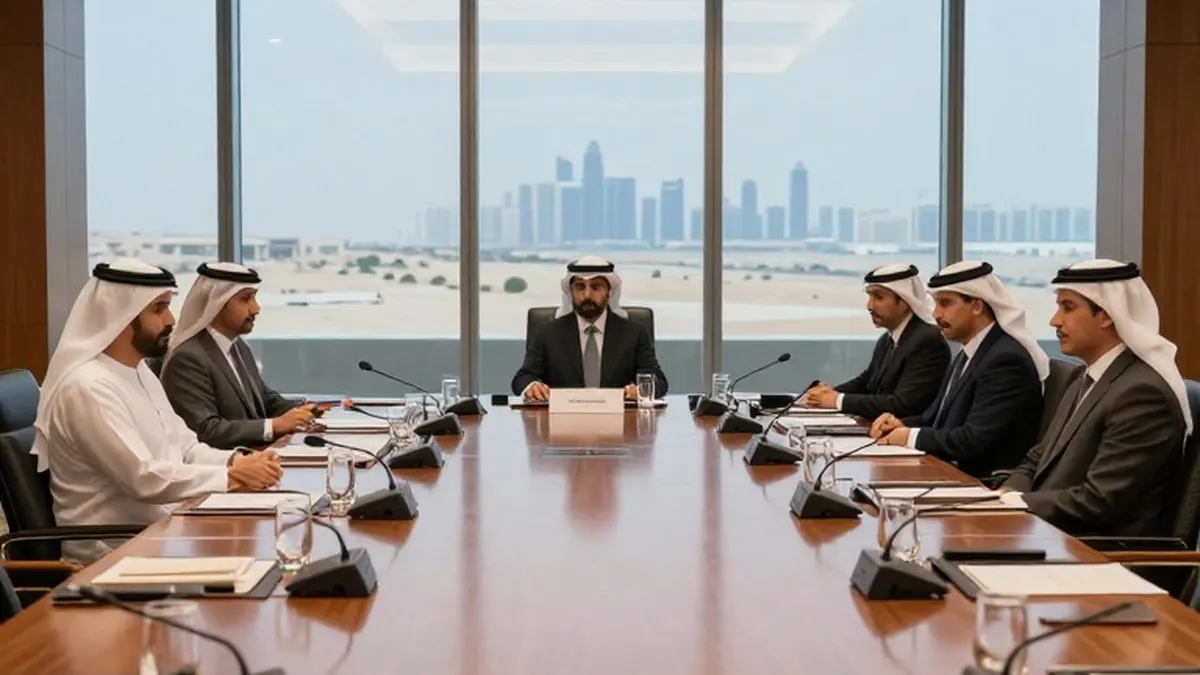
A new series of trilateral negotiations involving Russia, Ukraine, and the United States is set to begin in Abu Dhabi. The talks are scheduled for Tuesday and Wednesday, marking a significant resumption of diplomatic efforts after a long pause. Previous attempts at peace mediated by the US in January and February of this year ended without a definitive outcome.
US Special Envoy Steve Witkoff announced the upcoming discussions last week. He stated that the agenda will center on post-war security arrangements, de-escalation measures, humanitarian efforts, and the next steps toward establishing peace. These topics are intended to address the most pressing concerns of all three parties involved in the conflict.
Ukrainian President Volodymyr Zelenskyy has outlined specific priorities for the delegation. Key topics include securing robust security guarantees, implementing an energy ceasefire, and unblocking trade routes in the Black Sea. Additionally, the Ukrainian side aims to discuss extended prisoner exchanges and preparations for a future summit among the leaders of Ukraine, the United States, and Russia.
The composition of the delegations reflects the high stakes of the meeting. On the US side, Witkoff will be accompanied by Jared Kushner, President Donald Trump's son-in-law and special envoy. The Russian delegation is led by Vladimir Medinsky, an aide to President Vladimir Putin, and includes senior military and intelligence officials. Ukraine is represented by Rustem Umerov, head of the Foreign Intelligence Service, alongside lawmaker Davyd Arakhamia and other diplomatic and military staff.
European representatives will also be present in Abu Dhabi, though their role appears to be advisory. Attendees include senior advisers from Germany, France, the United Kingdom, and Italy. Officials from the European Commission and NATO are also in attendance. However, experts doubt that Europe will have a formal vote or direct influence on the final terms of any potential peace deal.
Hanna Shelest, a security studies director at the foreign policy network Ukrainian Prism, suggested that European representatives will likely play an observing role at best. She noted that Russia has historically preferred to keep the negotiations framed as a matter between two superpowers. This approach allows Moscow to increase pressure on Washington while maintaining a specific diplomatic narrative.
Shelest expressed skepticism about the Russian delegation's willingness to compromise. She observed that when Vladimir Medinsky leads negotiations, the focus often shifts to demonstrating Russia's willingness to talk rather than reaching a concrete agreement. She described the expected tone as a long sermon about history, although she viewed the inclusion of high-ranking intelligence officers as a fairly positive signal of intent.
Despite the cautious mood, there are areas where progress seems possible. Shelest highlighted the potential for additional negotiations on prisoner exchanges and humanitarian pauses. These discussions could focus on villages near Oleshky in the Kherson region, where a temporary truce was recently arranged with the help of US First Lady Melania Trump. This pause allowed for the delivery of humanitarian aid and the evacuation of civilians in late October.
Trump recently spoke of a big beautiful agreement following conversations with Russian envoy Kirill Dmitriev. Kushner later detailed this vision on social media, describing a framework centered on permanent security consultations and crisis communication channels. However, Shelest pointed out that many of these concepts are not new to Russian diplomatic language. Ivan Us, an expert at Ukraine's National Institute for Strategic Studies, warned that talks with non-decision makers could be largely for show, yet he acknowledged the possibility of using the Oleshky truce as a template for wider ceasefires.
While there is cause for optimism, experts remain wary. Us noted that Russia continued its attacks in other areas during the Oleshky pause and used the time to fortify its positions. This suggests that the current talks may serve partly to stall for time while diplomatic channels are kept open.