Diwali fireworks deepen New Delhi's seasonal smog crisis
Heavy smog covered India's capital on Monday after Diwali firecrackers added to pollution from crop burning, traffic and other sources.
By Ricardo Brooks ·
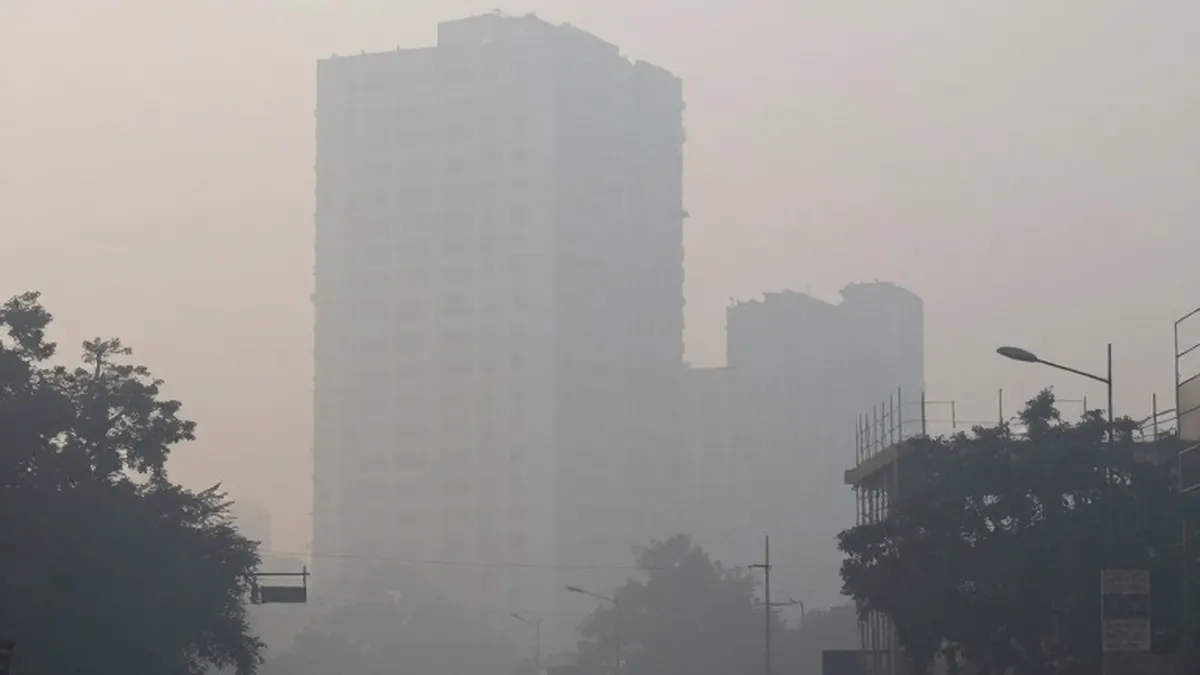
New Delhi was enveloped in dense smog on Monday morning after Diwali fireworks added smoke and fine particles to air that was already dangerously polluted. Gray haze obscured streets and high-rise buildings across India's capital, reducing visibility as the city faced another episode of its recurring seasonal pollution crisis.
Residents set off firecrackers on Sunday evening to celebrate Diwali, the Hindu festival of lights, despite restrictions on their use. By Monday morning, the Air Quality Index had climbed above 350 in several areas of the capital, with pollution reported in the severe category. Monitoring stations throughout the city registered similarly alarming readings, indicating significant risks to health.
In October, India's Supreme Court sought to reduce pollution during the festival by limiting conventional firecrackers. Its conditions permitted only approved green firecrackers during three-hour windows on Saturday and Sunday. Although these products generate fewer emissions, they still produce particulate matter and other pollutants, contributing to the burden on the city's air.
For residents, the deteriorating conditions brought physical discomfort. Isyad, a New Delhi resident who uses one name, described the effects on his throat and eyes. "Because of the pollution there is irritation in the throat and itching in the eyes," he said.
The capital and its surrounding metropolitan region have more than 30 million residents and frequently rank among the world's most polluted places in winter. Diwali fireworks arrive alongside cooler weather and smoke carried from agricultural fires in the neighbouring states of Punjab and Haryana, worsening an already difficult seasonal problem.
Farmers often burn the stalks remaining after the rice harvest to prepare fields for the next planting season. Smoke from those fires travels toward New Delhi, mixing with emissions from vehicles and industry, construction dust and other local pollution. Conditions are especially difficult in late October and November, when lower temperatures, weak winds and stagnant air keep pollutants from dispersing. The resulting haze can remain for days.
Authorities have introduced restrictions on construction work and diesel generators, while courts have sought limits on firecrackers. Those efforts have failed to stop severe pollution from returning each year. Environmentalists argue that lasting measures, including cleaner energy and tighter controls on vehicle emissions, are necessary to address the annual crisis.
Shweta Narayan, a public health expert with the Global Climate and Health Alliance, characterized the government's approach as "knee-jerk" and "temporary." She said many interventions take place only when pressure forces the government to act.