Israeli scientists develop BioPykrete, a super-strong ice alternative for extreme environments
Researchers at Hebrew University have created a biodegradable ice composite that is ten times stronger than standard ice, offering a potential solution for construction in polar regions and space.
By Olga Menon ·
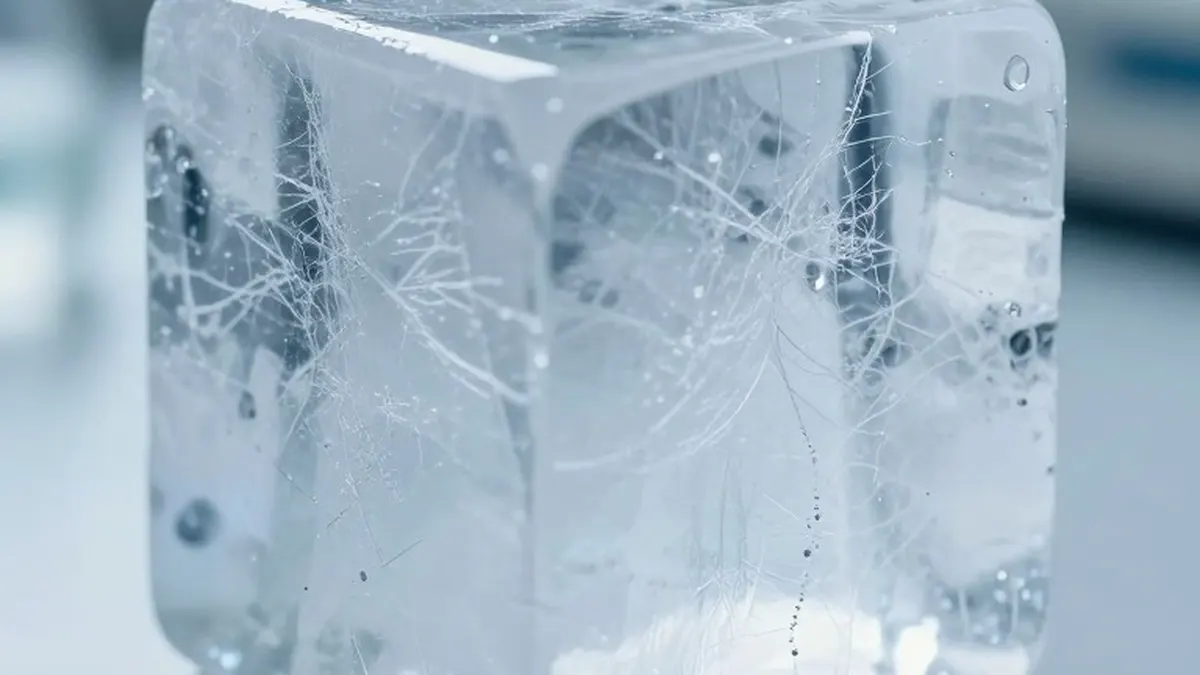
Israeli researchers have achieved a significant breakthrough in materials science by developing a molecularly bonded super ice that is ten times stronger than regular ice. A newly published study from the Hebrew University of Jerusalem details the creation of BioPykrete, an eco-friendly material composed of water, plant cellulose, and a specially engineered protein. The researchers report that this composite is also seventy times harder to break than ordinary ice, marking a major step forward in sustainable construction materials.
The material is designed to serve as a biodegradable alternative for building structures in extreme cold, such as in the Arctic or Antarctica. It also holds promise for future construction projects on the Moon and Mars. Prof. Ido Braslavsky, the lead researcher at Hebrew University’s Robert H. Smith Faculty of Agriculture, Food and Environment, noted that concrete production is a major source of carbon emissions and is particularly costly in polar regions. BioPykrete offers a greener solution that can melt away when no longer needed, leaving no rubble behind.
While normal ice can support significant weight due to tightly locked water molecules, its rigid structure makes it prone to shattering like glass. BioPykrete addresses this by incorporating cellulose fibers extracted from plant waste, which function similarly to rebar in concrete. These fibers reinforce the material, allowing it to bear heavy loads. Braslavsky stated that in laboratory tests, the compressive strength of the material approaches that of standard concrete, making it well suited for seasonal or temporary structures such as ice roads and camps.
The concept of enhancing ice has historical roots, particularly in the work of British inventor Geoffrey Pyke during World War II. Pyke, who was raised as an Orthodox Jew, proposed a project called Habakkuk to build a massive floating ice platform for refueling aircraft in the Atlantic. He collaborated with Max Perutz, an Austrian-born Jewish crystallographer, to develop a composite of ice and wood pulp known as Pykrete. This material was slower to melt and could deflect gunfire, although the project was ultimately abandoned. Perutz later shared the 1962 Nobel Prize in Chemistry for his work on protein structure.
Braslavsky’s new invention pays homage to Pyke and Perutz by taking their idea to a molecular level. His team designed a hybrid protein, referred to as a protein chimera, that acts as a two-sided molecular glue. This protein locks ice crystals directly onto plant cellulose fibers, holding the composite together from within. The result is a material that not only possesses greater strength but also breaks differently than regular ice. Instead of shattering suddenly, the cellulose network and protein connections allow the ice to absorb more energy and bend gradually, similar to wire-reinforced safety glass.
The lead researcher expressed surprise at how much stronger BioPykrete is compared to the original Pykrete, noting that the system is complex and difficult to predict. Braslavsky has spent over thirty years studying ice and snow, including the growth of snowflakes and the behavior of ice-binding proteins. His 2013 discovery that antifreeze proteins lock permanently into ice crystal facets provided the molecular foundation for the new material. He recalled making an ice menorah as a child, a early sign of his interest in inventing with ice.
The research team is currently investigating whether the material becomes even stronger in deeper cold and how it performs through repeated cycles of freezing and thawing. Braslavsky envisions a future where runways, roads, and shelters can be built from local water once the protein becomes cheaper to produce. Richard Cathcart, founder of the geographic consulting firm Geographos, who was not involved in the study, described BioPykrete as a boon for outdoor construction in cold regions. He speculated that cargo ships built with the material could withstand collisions with icebergs, potentially reducing delays in commercial shipping through the Arctic Ocean.
Looking toward space exploration, Braslavsky highlighted the potential of using BioPykrete on Mars, which has large deposits of water ice. By reinforcing this native ice with a small amount of the engineered material, it could become tougher and less brittle. This would allow for the construction of protective shelters using resources already present on the planet. Although testing on Mars is still a distant goal, the researcher described it as an exciting direction for the future of construction in extreme environments.