Army to Detonate 5 Tons of Lead Azide in Iowa
The controlled blast at the Iowa Army Ammunition Plant is scheduled for 9 a.m. Wednesday, following a federal court ruling that cleared the way for the disposal of unstable munitions chemicals.
By Ricardo Brooks ·
Residents within five miles of the Iowa Army Ammunition Plant in Middletown were advised to evacuate on Tuesday as the U.S. Army prepared to detonate the country's entire stockpile of lead azide. The controlled blast is set for 9 a.m. local time Wednesday, a day before Thanksgiving, after a federal appeals court ruled Monday that environmental safeguards were adequate.
Maj. Gen. Eric Shirley, who leads the operation, stated that inaction was no longer an option because the chemicals could explode spontaneously. The stockpile consists of roughly 5 tons of degraded lead azide stored in 68 barrels. These materials were originally used in munitions production and were consolidated at the Iowa facility in 2009 from several military bases across the United States.
During a routine inspection in March, staff discovered that the lead azide had partially crystallized. This change made the chemical sensitive to friction and cold temperatures, increasing the risk of an uncontrolled detonation. Experts determined that alternative methods, such as thermal treatment or chemical neutralization, were less safe than a controlled blast.
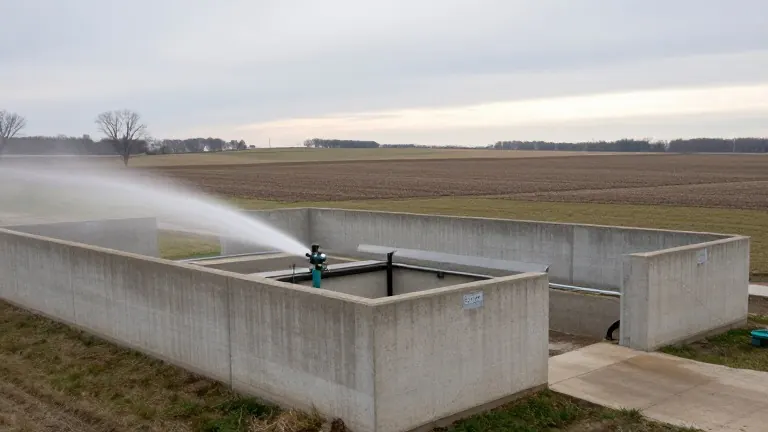
The Army has implemented physical barriers to contain the plume. The bunkers holding the barrels are surrounded by concrete and sand barriers two stories high. Ballistic gels and foams are positioned to absorb lead dust, and the military plans to use thousands of gallons of water to suppress the smoke. Acting Secretary of the Army Adam Telle said the public should not panic, noting that the barriers should limit the dispersion of the material.
Weather conditions have influenced the timing of the event. Officials changed the detonation date three times, moving it from a planned date last Friday to Wednesday. The shift allowed for additional safety preparations and ensured that wind patterns would carry the plume southwest toward Missouri, away from Burlington. Burlington is a city of just under 25,000 people located along the Mississippi River.
Environmental groups initially sued to halt the plan, arguing that lead dust could affect local air and water quality. The federal appeals court rejected the challenge, finding that the Environmental Protection Agency had properly incorporated safeguards. Despite the court ruling, some residents in West Burlington expressed concern about long-term impacts on their homes, farms, and local water sources.
Lucy Giehl, a resident of West Burlington, said the lead danger would likely persist for some time. She noted that the issue should have been addressed earlier than it was. Schools near Middletown closed ahead of the blast, and many businesses shut their doors. Some residents sealed their windows and doors as a precaution against potential dust intrusion.