Ohio State Students Report Delivery Robots Block Paratransit Ramps
A survey of 168 campus members found 36% actively alter their paths to avoid Grubhub rovers, while accessibility advocates describe the machines as creating barriers for wheelchair users.
By Amit Ricci ·
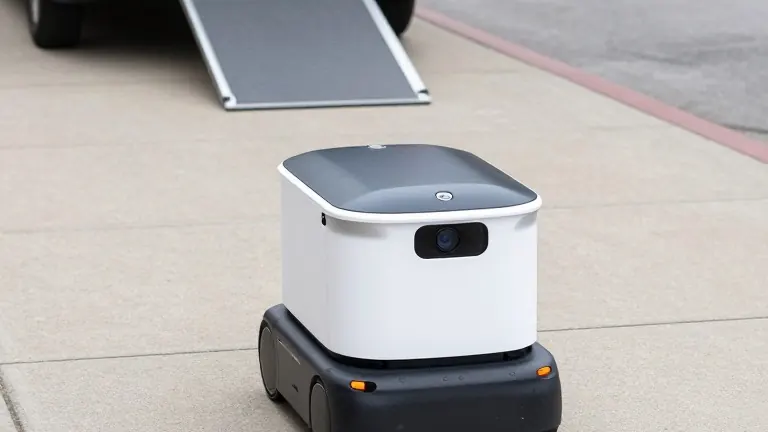
Delivery robots on Ohio State University sidewalks have become a source of friction for students using mobility aids, according to faculty and student accounts.
Code Beschler, a second-year graduate student in comparative studies and co-president of Buckeyes 4 Accessibility, described an incident where a Grubhub rover stopped directly in front of a paratransit vehicle ramp. The robot detected a vehicle on the road and halted, blocking Beschler from boarding the accessible van. He had to wait for the machine to clear the path before he could enter the vehicle.
The rovers, manufactured by Avride, operate on the same sidewalks as pedestrians. Beschler noted that the robots are approximately 1.5 feet wide, while standard campus sidewalks range from 4 to 5 feet wide. His wheelchair measures between 2.5 and 3 feet wide depending on the turn radius. He stated that passing a stopped rover often requires him to stop, wait, and regain momentum, a process that consumes major physical energy.
Anthropology professor Mark Moritz conducted an unpublished ethnographic study with graduate students last spring. The research team used observations, field notes, and interviews to analyze interactions between campus-goers and the rovers. A survey component involving 168 students, faculty, and staff members revealed how people adapt to the machines. Fourteen percent reported no change in movement, while 45 percent made small adjustments. Thirty-six percent actively moved out of the way or changed speed, and 4 percent stopped walking entirely to let the robot pass.
Moritz concluded that humans perform most of the accommodation work. "The robots are smart, but compared to humans, they’re pretty stupid," Moritz said. He noted that while pedestrians can step onto grass or move aside, individuals using wheelchairs or canes face more rigid constraints.
Beschler reported that a rover struck him in his wheelchair on a sidewalk. Moritz’s research included interview data from other pedestrians who claimed similar collisions. The physically disabled community on campus, according to Beschler, views the situation negatively. They feel the administration allows machines to co-opt curb cuts, rendering these accessible zones blocked.
University spokesperson Dave Isaacs stated that the rovers prioritize accessibility in their engineering. The vehicles use LIDAR sensors to detect objects up to 200 feet away and include programming to wait for traffic at curb cuts. Isaacs said the robots play a soft ambient noise to alert visually impaired individuals and roll in single file on shared pathways.
Laura Lawton, head of communications at Avride, said the navigation software is designed to recognize wheelchairs and give users the right of way. "That can mean moving to the side or turning around and moving back to a wider spot," Lawton said in an email. She added that a remote operations team can assist if the robot needs to give way.
Isaacs said routes are rerouted if sidewalks are deemed too narrow or congested. The rovers feature a phone number and QR code on their sides to connect users with Avride or Ohio State dining services. Lawton stated the company wants direct feedback from mobility aid users to adjust routes or drop-off points.
Beschler said a minor inconvenience for a walking pedestrian can be a substantial burden for someone using a rollator or wheelchair. "Every time you’ve seen a robot stuck, unable to move, and you go around it just going in the street, a wheelchair user can’t do that," Beschler said.