Archaeologists dig 11 meters into Kabul's Bala Hissar to reveal 2,000 years of history
A conservation project at the crumbling fortress is uncovering Buddhist monasteries and Mughal palaces, aiming to create a public park.
By Ricardo Brooks ·
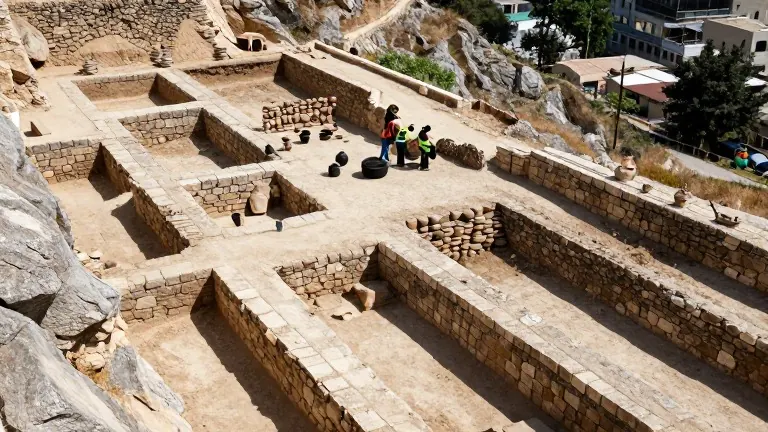
Excavations at the Bala Hissar fortress in Kabul are exposing nearly two millennia of continuous human settlement. The site, perched on the Kuh-e-Sher Darwaza mountain ridge, has served as a strategic stronghold for centuries. It has functioned as a fortress, prison, and military garrison through various eras of Afghan conflict.
The Aga Khan Trust for Culture began conserving the site in 2018 after initial planning in 2017. Their work involves stabilizing crumbling walls and conducting deep excavations. One trench has already reached a depth of 11 meters. Workers use locally sourced rock to rebuild defensive structures, ensuring new sections are visually distinct from original construction.
Archaeologist Babak Rafiei-Alavi described the discoveries as resembling a submarine emerging from the ocean. Teams have unearthed ancient coins, glazed Islamic ceramics, and oil lamps. They also found remains of a Buddhist monastery and a Mughal palace. The palace ruins include murals, a throne-like structure, and a star-shaped pool carved into the rock.
Mustafa Nouri, the project manager for the Aga Khan Cultural Services, noted that the site sits along a major trade route connecting the Indian subcontinent to Central Asia. He stated that controlling the fortress historically meant controlling the region. The current plan includes landscaped gardens, restaurants, and a museum to open the site to the public. The project also features a training program for Afghan archaeology students.
The fortress has suffered extensive damage over the centuries. British troops destroyed much of the complex in 1879 following the killing of envoy Sir Louis Cavagnari. In 2008, U.S. forces leveled part of the site, which Rafiei-Alavi said destroyed many archaeological layers. Today, the grounds still contain rusting Soviet tanks and abandoned large-caliber weapons from the post-2021 U.S. withdrawal.
Work temporarily halted after the Taliban seized power in 2021, but the Aga Khan Trust continued its operations from 2022 onward. The current Taliban government has stated it is committed to preserving the nation's cultural heritage. Spokesman Khubaib Ghufran said the ministry views these remnants as valuable sources of insight. He emphasized the goal of passing this legacy to future generations in a well-preserved state.