Human neurons grow in mice brains, offering a new model for disease research
Stanford researchers say human tissue implanted into mice could help scientists investigate brain function and disorders, while raising questions about the boundaries of such experiments.
By Amit Ricci ·
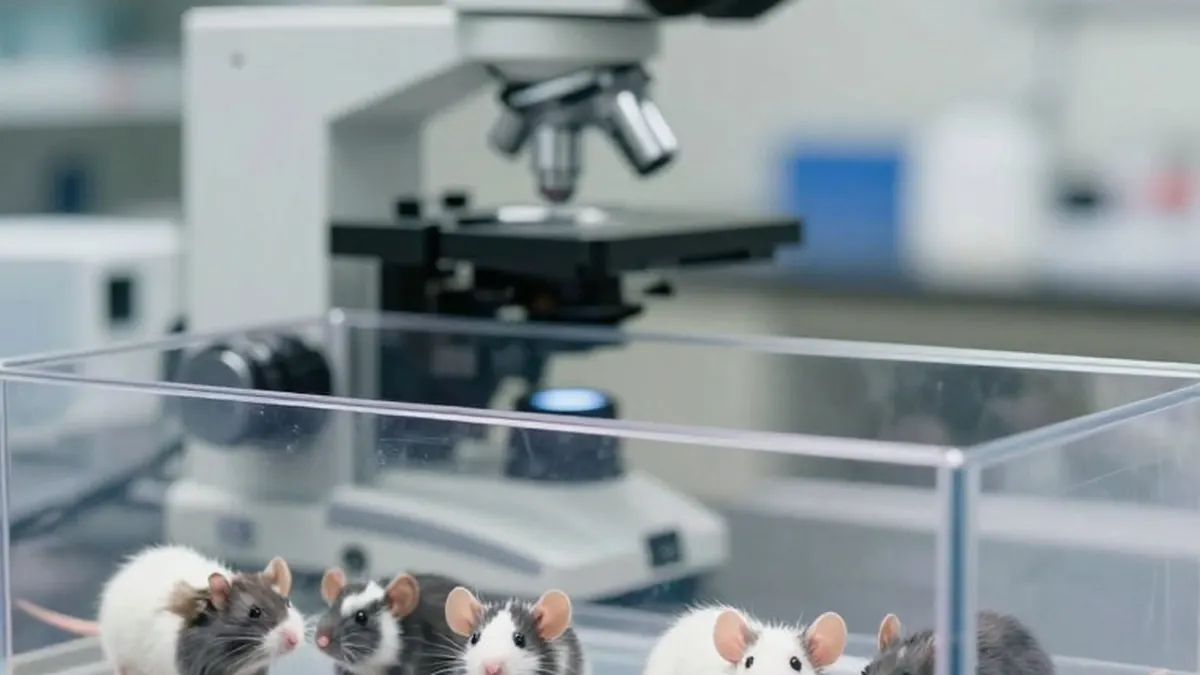
Scientists at Stanford University in California have grown functioning human neurons inside mice whose brains were genetically altered to leave space for the tissue. The research, published in Nature, could provide a way to examine neural circuits and conditions including schizophrenia, cerebral palsy and dementia.
The mice were engineered to develop without most of their cerebral cortex and the neighbouring hippocampus, regions involved in functions including movement, learning and memory. Two days after birth, the animals received injections of human organoids, small collections of laboratory-grown cells that mimic aspects of organs. These organoids came from healthy donors’ stem cells, with each containing approximately 100,000 human cells.
The experiment involved removing roughly 14 million mouse neurons and introducing about 4 million human neurons. Of the 29 mice that received transplants, 25 had successful results. Researchers stressed that the procedure was not a brain transplant and did not produce mice capable of thinking like people.
After three months, the implanted tissue had expanded to around five times its initial size, established connections with the animals’ blood supply and occupied more than 90 percent of the cavities. Although human tissue accounted for roughly half their brain volume, the mice largely walked and vocalised normally. They also performed better in a maze than mice lacking the implants, which repeatedly became lost. That difference suggested the human cells contributed to cognition.
Some transplanted tissue unexpectedly formed von Economo neurons. These rare, elongated cells are ordinarily absent in mice and are exceptionally difficult to produce in a laboratory. They occur in highly social species, including humans, apes, whales and elephants.
The findings could also help researchers study cerebral palsy. Oxygen deprivation associated with complications during human childbirth is uncommon in newborn mice, making the condition difficult to investigate in rodents. When researchers exposed the modified mice to low oxygen, the animals developed brain damage, changes in their gait and difficulties coordinating their limbs.
Studying the human brain presents considerable obstacles because of its complexity and the ethical and safety restrictions on accessing living tissue. It contains approximately 86 billion nerve cells and trillions of connections. Laboratory organoids offer an alternative, but lack the connections, inputs and surroundings of a living brain. Senior author Sergiu Pasca, a Stanford professor of psychiatry and behavioural sciences, said the new approach could open access to aspects of human brain function that other models struggle to reveal.
The work also brings questions about sensation and consciousness into focus, including whether tissue grown outside a person's body could develop either capacity and how scientists could establish that. Researchers ended the experiments when the implanted human neurons were six months old, before further connections could develop with the mouse brains and before signs of consciousness appeared.
John Evans, a sociology professor at the University of California, San Diego, who was not involved in the research, said the experiment itself did not present major ethical problems. However, he said it demonstrated the possibility of creating other animals that could pose more serious concerns. Citing the difficulty of defining stopping points as research moves from mice towards non-human primates, Evans recommended keeping such experiments limited to rodents for now.