UK Public Bodies Struggle With Surge in AI-Generated Complaints
Councils, courts, MPs' offices and employers say chatbot-drafted letters and legal challenges are overwhelming staff already working with stretched resources.
By Amit Ricci ·
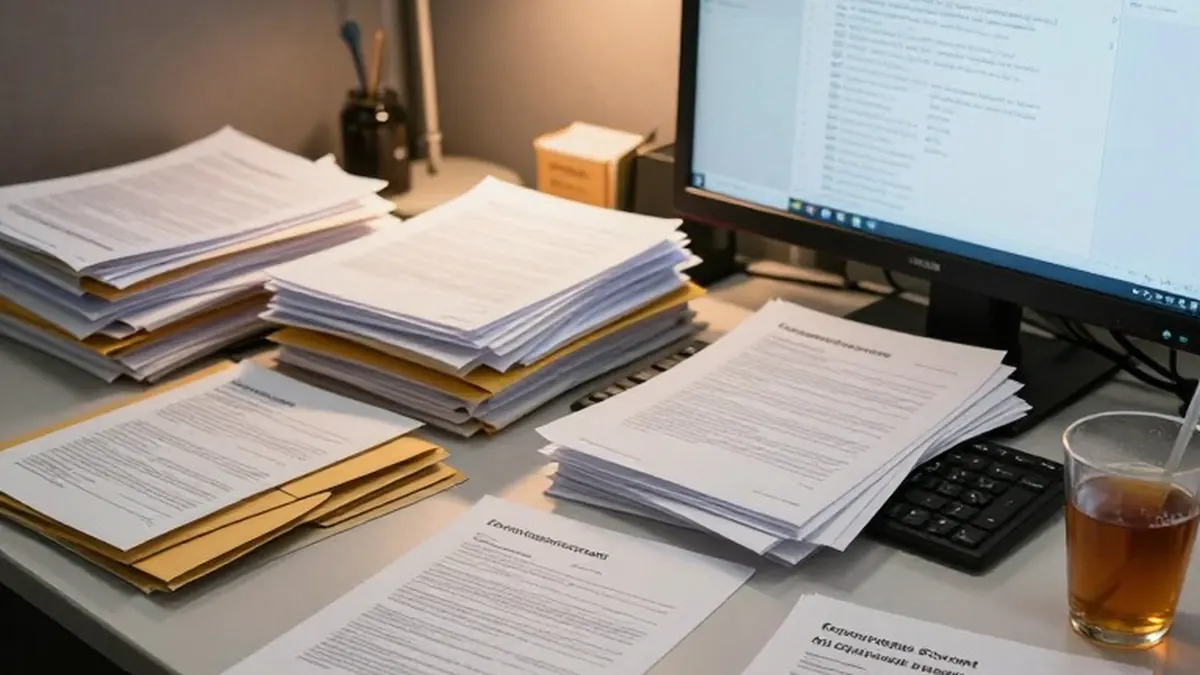
Public bodies and businesses across the UK are being inundated with complaints, letters and legal challenges produced by artificial intelligence tools, a phenomenon that commentators have dubbed "AI clog".
Hollie Wickens, a senior caseworker in a Labour MP's office, said the shift has been dramatic. "It started as a trickle in 2024 and now it's an onslaught," she said, estimating that half the emails her office receives are some form of AI. Despite a decade in the role, she said the correspondence has become far more complex and time-consuming to handle. "It is definitely more taxing."
The rise of tools such as ChatGPT, which turns four later this month, along with Claude, Copilot and Gemini, has given ordinary people access to what amounts to a free, if sometimes unreliable, legal adviser or personal assistant. While developers promised productivity gains, and AI has been credited with contributing to some of this year's better than expected UK GDP growth, organisations say the flood of machine-written correspondence is gumming up their operations. Researchers at the centre for digital governance at the Hertie School in Berlin, the Cooperative AI Foundation and GovAI have labelled the deluge "agentic flooding".
"Every sector is experiencing very similar issues," said Deborah Evans, chief executive of Lawyers in Local Government, which represents 5,600 lawyers in local authorities. She said complaints that once averaged about two pages are now mostly 10 times longer, with the worst she knows of running to about 200 pages. Councils say length, certain phrases and bullet points are telltale signs of AI drafting. "Local authorities have one pot of money and don't get extra money because of more complaints," Evans said.
The Information Commissioner's Office found that many public authorities received more requests in 2025, noting that AI-generated requests can be "very long, repetitive and contain unrelated comments or misdirected demands", and can be harder to interpret. Even so, the watchdog cautions that such requests still require human answers. Councillor Alessandro Georgiou, leader of Enfield council, called the trend "a real problem", pointing to a significant uptick in parking appeals.
Employers are feeling the strain too. The founder of one technology start-up, whose former employee is challenging a dismissal at an employment tribunal, said: "Everyone's got a free lawyer now." The entrepreneur expects to have spent £30,000 in legal fees by the time the case is heard. Government figures show employment tribunal claims opened between April and June rose 28% on a year earlier, with 14,000 cases from single claimants and 70,000 open single claims at the end of June. Jim Moore, an employee relations expert at Hamilton Nash, said many AI-drafted complaints are "unnecessarily verbose" and contain "embellished or exaggerated claims that portray relatively minor incidents as major offences", while often failing to state what resolution the complainant actually wants.
Statutory response deadlines add to the pressure. Transport for London received a record 4,769 freedom of information requests in 2025-26, up 5% on the previous peak in 2023-24, and its audit and assurance committee reported a "noted increase" in appeals apparently generated by AI, containing "highly technical and often inaccurate assertions and assumptions".
Westminster offices are also struggling. Vonnie Sandlan, head of office for Graeme Downie, the Labour MP for Dunfermline and Dollar, said the surge has left staff "exhausted", and her office has stopped responding to automated "click to email your MP" campaigns. Lisa Gillmore of the GMB union's MPs' and peers' staff branch said casework has doubled or more in offices that track it. Some ombudsman services are imposing word limits, Wiltshire council is exploring AI tools to summarise long emails, and Stroud district council has discussed using Microsoft's Copilot for reports. Researchers have suggested charging fees or blocking bots from government websites, while the government has advised civil servants to verify AI-provided facts and keep humans in charge of final decisions.
Technology journalist Jamie Bartlett, who has collected many accounts of the problem, warned: "Public bodies and companies are probably going to have to use some form of AI to start filtering things out, or set stricter rules on what they'll accept and what they won't. Otherwise I worry they're going to get completely overwhelmed."