Canada positions itself as a hub for AI data centers amid US resistance
As American voters increasingly oppose local AI infrastructure projects, Canadian provinces are leveraging natural resources and political support to attract major hyperscale data center investments.
By Amit Ricci ·
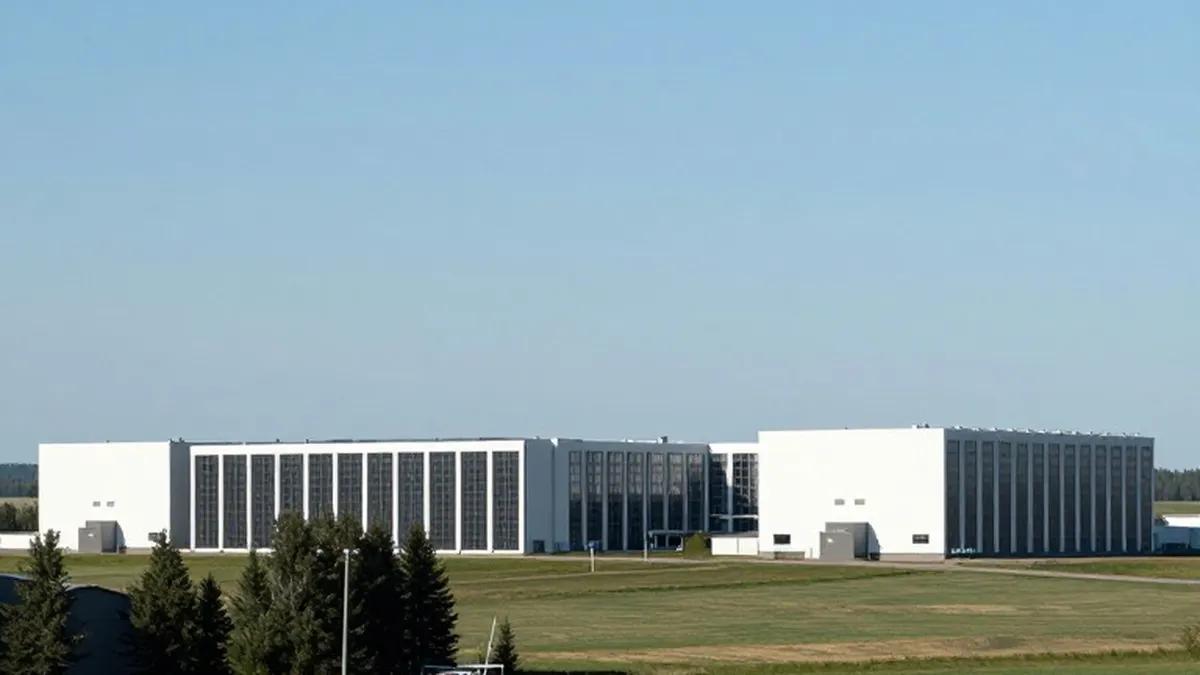
Canadian industry leaders are seizing an opportunity as American sentiment toward artificial intelligence data centers turns negative. Following a recent midterm election where voters in the United States approved 40 out of 41 local initiatives aimed at limiting or preventing such developments, many Canadian officials and executives view their country as an attractive alternative destination for these facilities.
Lucy Hargreaves, CEO of the non-profit policy group Build Canada, noted on social media that data centers in Canada appear highly appealing. She explained in an interview with the BBC that capital previously intended for US construction is now more available for Canadian projects. The core question, she argued, is whether Canada intends to pursue that investment.
Canada has been pitched as a hub for hyperscale projects due to its abundant land, natural gas supplies, and cold climate. These factors help address common US infrastructure challenges, including noise pollution, grid strain, and proximity to populated areas. In contrast to the intense debate in the United States, pushback in Canada has remained relatively muted, allowing legislators to embrace the projects without significant political fallout.
Alberta is at the center of this boom, with 90 percent of all currently proposed sites located in the province. The government has marketed Alberta as a preferred destination by offering investors a concierge service to accelerate construction. Kevin O'Leary, a Canadian businessman and ally of Donald Trump, is investing in two large facilities named Wonder Valley, one in Alberta and one in Utah, though the reception for each is starkly different.
In Utah, residents have organized a fierce opposition campaign, leading a state senator to demand a 75 percent reduction in the project size. Financing for the Utah site remains underway, and construction timing is unclear. In Alberta, however, the 7,000-acre project has received strong backing from both provincial and local governments. The site is designed to be off-grid, powered by regional natural gas, and was exempted from an environmental impact assessment in April, though permits are still required.
Local support in Alberta has been largely positive, with community leaders describing the project as a perfect fit for their rural economy. Reeve Ryan Ratzlaf of Greenview Municipality stated that the project is less risky than petrochemical plants and that economic benefits outweigh potential risks. However, some residents have raised concerns about water usage, with the facility projected to use six million cubic metres annually, roughly equivalent to 2,400 Olympic-size swimming pools.
Despite local support, signs of growing public anger are emerging. Recent town halls have seen furious residents questioning the government's push forward, particularly after Alberta announced that Meta would build a 13 billion Canadian dollar data center in the province. The Sturgeon Lake Cree Nation has also sued the government over the override of an environmental assessment for the Wonder Valley project.
The Alberta government has proposed new legislation to restrict where data centers can be built in an effort to ease concerns. Meanwhile, in Nova Scotia, hundreds of protesters gathered against a proposed facility for the technology company Anthropic. Experts warn that the US backlash serves as a cautionary tale, noting that AI is not generally popular in either country and that Canada could face similar resistance if it is not thoughtful in its approach.
The federal Carney government has framed data center development as a matter of national security and sovereignty, projecting a need to expand computing capacity 16-fold over the next four years. Premier Doug Ford of Ontario has similarly urged his province to move full steam ahead. Sean Mullin, a senior fellow at the University of Toronto, suggested that the current lack of severe backlash in Canada is partly due to timing and the smaller scope of projects compared to the US.
Canada has released high-level guidance for data center development, co-signed by major players like Meta and Anthropic, which calls for minimizing water use and creating long-term regional benefits. Bek MacIntosh, an Alberta resident who successfully halted a data center in Olds, warned that while she is not opposed to all AI infrastructure, she fears the province has opened the door to reckless developers. She cautioned that voters might have a knee-jerk reaction if provinces do not take care to develop these projects responsibly.