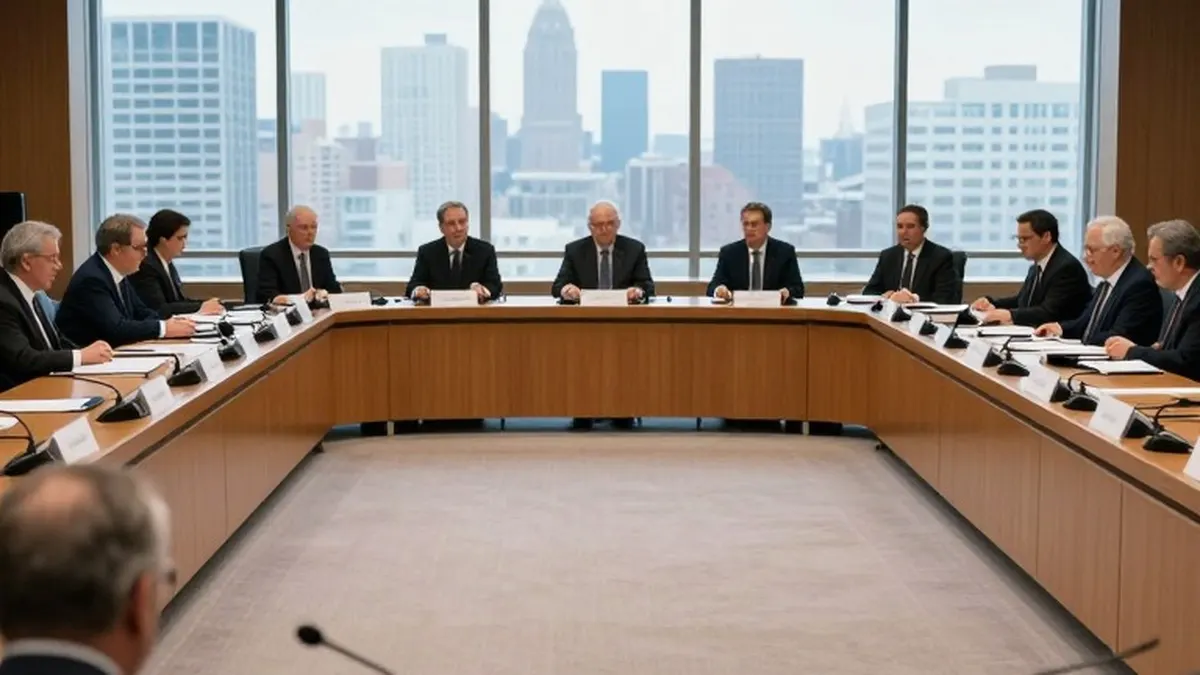
Nvidia CEO Jensen Huang reinstated after White House intervention
Nvidia has restored its founder and CEO to the top post just days after his resignation, following strong lobbying by the Trump administration and significant pressure from the stock market.
By Olga Menon ·

Jensen Huang has resumed his role as chief executive officer of Nvidia, the semiconductor giant, only eleven days after stepping down from the board. The abrupt return followed allegations of an extramarital affair with an executive at a client company, which some officials linked to a suspected Chinese intelligence plot. Huang welcomed employees at the company’s Santa Clara headquarters on Monday, a week after the board initially stated it would not bring him back.
President Donald Trump publicly claimed credit for orchestrating Huang’s return, emphasizing the need to protect key technological talent. The White House stated that the nation must safeguard its geniuses. This move comes while multiple investigations, including an FBI counterintelligence review, are still underway regarding Huang’s alleged connections to a Chinese intelligence asset.
Huang, the 63-year-old co-founder, resigned on November 12 amid reports of romantic relationships with several executives, including Alice Huang. She leads Megaspeed, a Singapore-based firm that some in the administration believe is a Chinese intelligence asset. The New York Times first reported the alleged spy plot, though Beijing has denied that Alice Huang is a spy. Nvidia’s board began its own probe but accepted Huang’s resignation before the investigation concluded.
The market reacted sharply to Huang’s initial departure. Analysts warned that his exit could erode up to 30 percent of Nvidia’s valuation. Indeed, shares dropped by 27.7 percent to a low of $3.04 trillion on November 20. However, following the announcement of his reinstatement, the stock rebounded significantly, pushing the company’s valuation back to $3.98 trillion by the close of trading on Monday.
Efforts to restore Huang gained momentum after a petition attracting over 180,000 signatures, including from SpaceX CEO Elon Musk, called for his return. Silicon Valley insiders reportedly formed a war room to lobby the White House. Trump told CNBC that he represented the administration at the board level and provided assurances to address national security concerns raised by the board members.
Despite holding only a 3.58 percent ownership stake and lacking voting control over the board, Huang’s influence remained substantial. Board Chair Harvey Jones initially told investors that Huang had left voluntarily and would not return. The board had also established a National Security and Export Control Committee to oversee compliance. However, Jones later reversed course, stating that the board received input from senior US government officials and concluded that Huang’s reinstatement posed no national security risk.
The reinstatement had a profound impact on global markets. On Monday, Nvidia’s shares surged 31 percent in early trading, adding roughly a trillion dollars to the company’s value. The tech-heavy Nasdaq index climbed 6.5 percent, while the S&P 500 rose 4.75 percent. The following day, major Asian markets also rallied, with Taiwan’s index soaring more than 9 percent and South Korea’s Kospi index gaining over 6.8 percent.
Nvidia’s central role in the artificial intelligence industry amplifies the significance of this leadership change. The company controls approximately 90 percent of the global market for data center graphics processing units, which are essential for AI infrastructure. This dominance places Nvidia at the heart of the US-China technology rivalry.
Hours after Huang’s return, the US government added Megaspeed to its trade blacklist. Washington restricts the sale of advanced chips to Beijing to maintain its technological lead. Nvidia’s major customers, including Microsoft, Google, Amazon, and Meta, rely on its hardware for their AI data centers. Huang has long advocated for allowing chip sales to China, a stance that often puts him at odds with legislators who view the technology as a national security asset.