Geneva talks on AI warfare conclude without binding treaty
Negotiations on autonomous weapons systems ended in Geneva with a pledge for future talks, as major powers resisted immediate legal restrictions.
By Amit Ricci ·
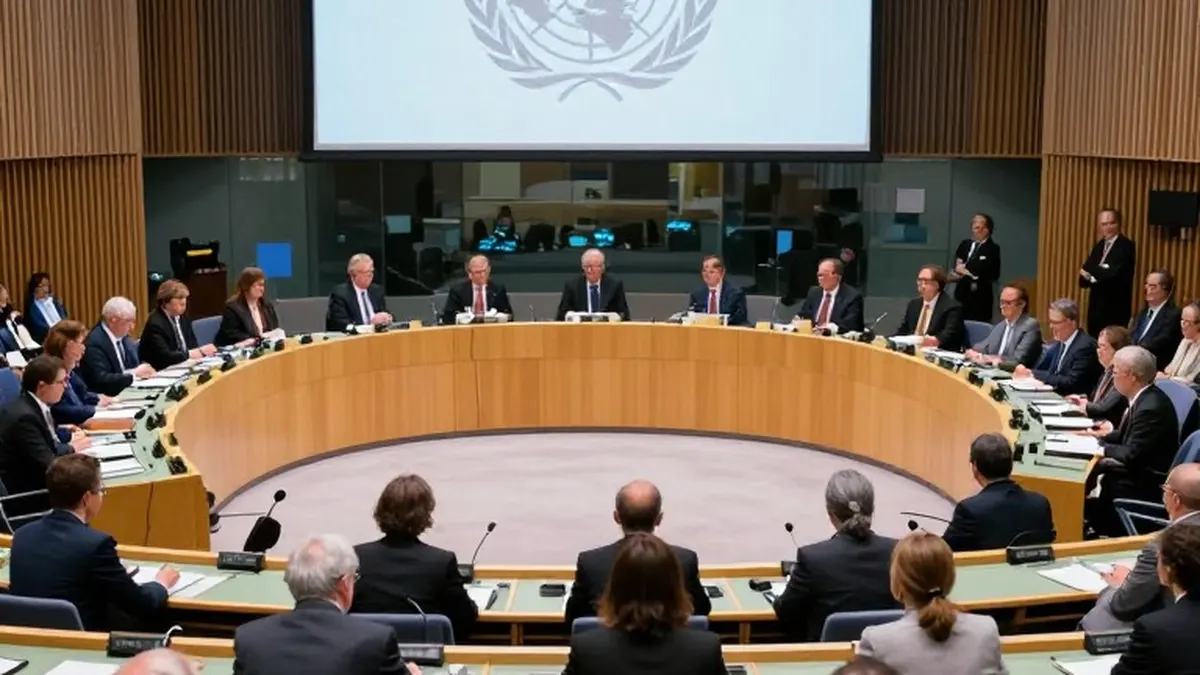
International negotiations aimed at regulating the use of artificial intelligence in warfare concluded on Saturday without reaching a consensus on binding rules. The talks, which took place from Monday to Friday in Geneva, resulted in an agreement to continue discussions but failed to produce firm regulations on lethal autonomous weapons systems.
The discussions were held under the Convention on Certain Conventional Weapons. More than 100 nations that are party to the convention, including Canada, participated in the proceedings. While the majority of countries supported the goal of working toward a treaty, the final outcome was softer than what many advocates had hoped for.
Proponents of strict regulation, including UN Secretary General Antonio Guterres, had called for a legally binding treaty to be established within a short timeframe. Such a treaty would address AI-driven weapons, such as drones capable of identifying and eliminating targets without direct human involvement.
However, several major military powers, notably the United States and Russia, resisted committing to binding rules that might limit their development of high-tech weaponry. This resistance led to a compromise agreement to elaborate on a possible accord by the year 2028, rather than finalizing a hard law immediately.
Izumi Nakamitsu, the UN high representative for disarmament affairs, described the outcome as a significant achievement while acknowledging the mixed feelings of delegates. She referenced the scenario as being either half full or half empty, given Guterres's desire for a binding deal earlier in the year. Nakamitsu urged countries to begin work on a deal as early as Monday and to think about creating the strongest possible instrument to prohibit and regulate these systems.
Advocacy groups expressed disappointment over the blocking of stronger language at a time when AI is becoming an increasingly critical factor in deadly military strikes. Max Tegmark, a machine learning specialist at the Massachusetts Institute of Technology and founder of the Future of Life Institute, noted that states have agreed to simply talk about the issue for the 14th year while these weapons enable atrocities.
Branka Marijan, a senior fellow at the Centre for International Governance Innovation, characterized the outcome as disappointing but expected. She pointed to a lack of political will among major militaries to accept legally binding instruments and hard laws, which she described as an incredibly dangerous move toward deployment without guardrails.
The urgency for regulation has grown as AI is used more frequently in conflicts worldwide to gain tactical advantages. Both Russia and Ukraine are employing AI to track targets and plan attacks in a war that is entering its fifth year. Reports indicate that autonomous drones operated by Russia have killed civilians in Ukraine, while Ukraine has also reportedly tested similar weapons.
The United States has also made a major push to increase its use of AI in combat, including testing advanced fighter drones that fly themselves. Marijan warned that there are immediate risks because each country can deploy these systems now with no real constraints, despite the potential for extreme scenarios.
Canada, which agreed to a declaration on governing AI in warfare at a military summit in Spain in February, supported a UN resolution in 2025 calling for groundwork toward treaty negotiations. The Department of National Defence stated that the Canadian Armed Forces supports autonomous functionality provided it is operated within a responsible chain of human command and control.