UAE still main hub for smuggled and conflict gold, Swissaid report finds
A new study by the Swissaid foundation says the United Arab Emirates imported at least 591 tonnes of illicit gold in 2024 despite regulations meant to curb the trade.
By Ricardo Brooks ·
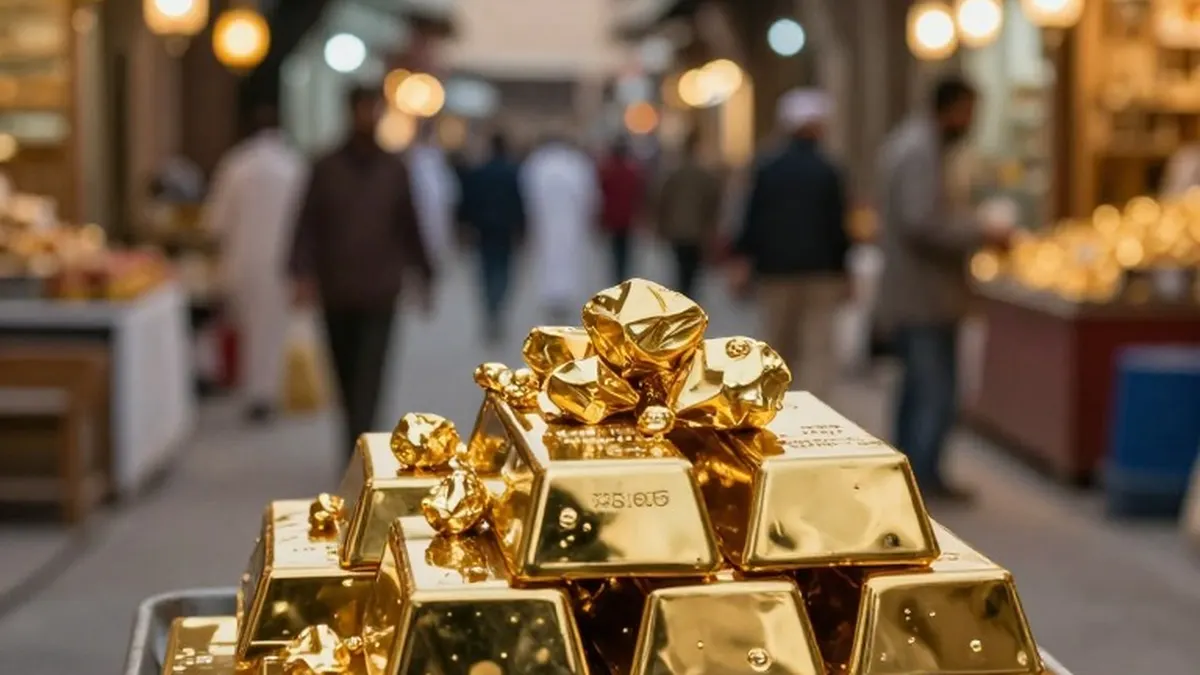
The United Arab Emirates remains the principal trading hub for smuggled and conflict gold, according to a new report by Swissaid, a Swiss foundation. The finding comes even though the country introduced legislation in 2023 that was meant to curb illegal flows of the metal.
The UAE, now the world's second largest gold trading hub after Switzerland, imported at least 591 tonnes of illicit gold in 2024, the report said. Illicit gold refers to metal that was either smuggled into the country without being traceable, most often arriving at the gold markets of Dubai, or that originates in countries at war, including Yemen, Sudan and Russia.
Swissaid found that in 2024 the UAE imported at least 174.5 tonnes of gold from Russia, both directly and indirectly through Armenia, as well as from Yemen and Sudan. The organisation said the entire volume from those three countries can 'be considered as conflict gold'. Marc Ummel, head of Swissaid's commodities unit and a co-author of the study, said: 'The findings of this study are deeply concerning. They show that the United Arab Emirates remains a hub for smuggled and conflict gold.'
The UAE has been directly involved in the wars in Yemen and Sudan, where it is the patron of the Rapid Support Forces, a paramilitary group widely determined to have committed genocide in parts of Darfur. Abu Dhabi denies the accusation and says its role in Sudan is purely humanitarian. Gold, alongside access to farmland, mercenaries and the Red Sea, is seen as one of the main drivers of the UAE's interest in Sudan and Africa more broadly.
The family of RSF chief Mohamed Hamdan Dagalo, better known as Hemedti, profits from gold mines in Darfur, and the group's own trading company, al-Junaid, built considerable wealth smuggling gold from Sudanese territory under its control to Dubai. Gold also leaves areas held by the RSF's enemy, the Sudanese Armed Forces, crossing into Egypt, Ethiopia, Chad, Libya and South Sudan before almost always being officially exported to the UAE. More than 95 percent of gold from Sudan, Niger, the Central African Republic, Zimbabwe, Libya, Togo and Cameroon that was declared as imports in partner countries ended up in the Emirates.
Gold producing areas have been pulled directly into Sudan's war. On the border with Egypt, the Egyptian military has killed Sudanese miners in air strikes, while on the Ethiopian border, mining concessions linked to the UAE sit near areas used by the Ethiopian army to support the RSF. Suliman Baldo, a Sudanese expert on the gold trade, told Middle East Eye earlier this year that artisanal miners dominate between 85 and 90 percent of production in Sudan, and that wholesale traders buy from them and smuggle the metal to the UAE.
The trade is highly lucrative. One Sudanese trader and refiner in River Nile state told MEE he earns up to $150,000 a month extracting one to two kilograms of gold, after covering costs such as workers, fuel, accommodation and mercury. He said hundreds of thousands of artisanal miners work in both RSF and SAF controlled territory, with most of the output smuggled abroad through South Sudan, Chad, the Central African Republic, Ethiopia, Kenya or Egypt. 'The final destination for the gold is still the UAE, especially the gold market in Dubai,' he said, adding that the metal passes through many brokers and mediators.
Dubai's geographic position between Africa's mines and Asia's demand centres, its tax free zones and its regulated quality standards have made the UAE a bridge between gold producing and gold consuming countries. Between 2012 and 2022, more than 2,500 tonnes of smuggled gold worth over $115bn left Africa for the Emirates. In 2024 alone, 413 tonnes of gold smuggled out of Africa was officially imported into the UAE, and more than half of the country's gold imports in 2024 and 2025 came from African states. Around 70 percent of the gold extracted in Africa in 2024 was shipped to the UAE.
A previous Swissaid report identified the UAE as the main destination for smuggled African gold in 2022, when it took in 405 tonnes. Responding at the time, a UAE official said the country had taken significant steps to address gold smuggling and had implemented new regulations on precious metals. The latest investigation, which drew on data from 2021 to 2025 and interviews with more than 150 stakeholders, concluded that due diligence requirements for refineries that took effect in 2023 'have failed to stem the inflow of smuggled African gold', with figures pointing to a slight increase instead.
Swissaid said the findings matter for Switzerland's own industry, because the Alpine nation is the main importer of gold from the UAE and the world's largest gold trading hub.