Ukraine Weighs Potential Deal Trading Donbas for NATO Membership
President Zelensky hints at a US proposal to exchange the Donbas region for NATO membership as Europe faces a critical week of diplomatic summits and internal political shifts.
By Amit Ricci ·
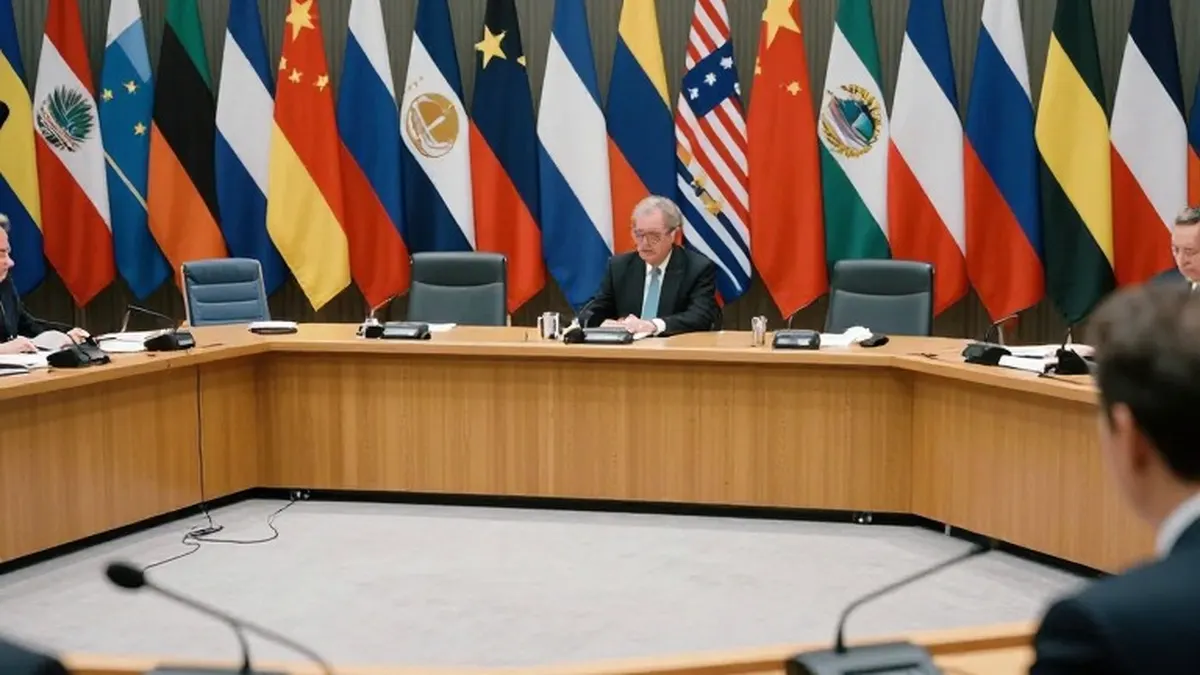
President Volodymyr Zelensky has suggested that the United States has proposed a direct diplomatic exchange regarding the ongoing conflict with Russia. According to the Ukrainian leader, the American proposal involves Russia taking control of the Donbas region in exchange for the rest of Ukraine receiving full NATO membership. This arrangement would also include a security guarantee designed to prevent Moscow from attempting to annex the entire country in the future.
The revelation has sparked debate over the seriousness of the offer and the likelihood that both parties would accept such terms. Analysts are questioning whether this talk of partition signals a significant turning point in a war that has now lasted nearly five years and has settled into a brutal stalemate. The timing of these remarks adds weight to the speculation, as they were made just days before a scheduled three-way summit in Shenzhen, China.
Some observers have drawn comparisons between the upcoming Chinese summit and the 1945 Yalta Conference, where Soviet and Anglo-American leaders divided Europe. While the parallels are debated, the event is viewed as a crucial moment for the continent. The summit comes at a time when some of Ukraine's strongest backers may be operating on borrowed time, raising questions about the durability of Western support.
The diplomatic landscape is further complicated by recent tensions along the Russian-Estonian border over the weekend. These incidents highlight the continuing friction between Russia and its neighbors. Meanwhile, European Union leaders are struggling to present a unified front, recently failing to agree on a single name to represent the bloc in Ukraine war talks. This lack of cohesion underscores the challenges facing European unity as the conflict persists.
In France, the political landscape is shifting in ways that could impact Ukraine's support base. Marine Le Pen, the far-right presidential frontrunner, has been in the spotlight following her 2017 campaign, which was financed by a Russian bank. Although she acknowledges that a majority of her compatriots support Ukraine, she made a courtesy visit to the Ukrainian ambassador in Paris on Monday to address the relationship.
During her remarks, Le Pen reiterated her stance that if she is elected president, she will cut off financing for Kyiv. This position reflects a growing segment of French public opinion that favors a renegotiation of support levels. Her comments add another layer of complexity to the diplomatic efforts, as France remains a key player in European foreign policy.
The production of the latest news analysis on this topic was handled by a team including Rebecca Gnignati, Elisa Amiri, and Ilayda Habip. Their report explores the implications of the proposed swap and the broader strategic shifts occurring in Europe. The focus remains on how these developments will shape the future of the continent and the trajectory of the war in Ukraine.
As the week progresses, attention will remain on the outcomes of the Shenzhen summit and the reactions from key global powers. The interplay between military realities on the ground and diplomatic maneuvers in capitals across Europe and Asia will determine the next phase of the conflict. Stakeholders are closely monitoring whether the proposed trade of territory for security guarantees will gain traction or remain a theoretical possibility.
The debate over whether Ukraine should trade the Donbas for NATO membership is not just a matter of territorial integrity. It is a question of long-term security architecture for Eastern Europe. If the deal proceeds, it could redefine the balance of power in the region. If it fails, the stalemate may continue, with both sides preparing for prolonged conflict. The coming days will provide critical insights into the viability of this proposed solution.