Saudi Arabia's Music Boom Raises Questions About State Control
Rapper Asayel Bishi's rise highlights the tension between Saudi Arabia's expanding music industry and the state's strategic vision for cultural development.
By Ricardo Brooks ·
Asayel Bishi, a 31-year-old rapper, has become one of Saudi Arabia's most prominent hip-hop artists. She is currently signed to MDLBEAST, the country's largest record label for new music. However, her path to mainstream success was not always smooth. In 2020, Bishi released a music video for her song "Bint Mecca," which featured people dancing in a local cafe. The governor of Mecca subsequently called for the arrest of her production team, arguing that the video violated the holy city's local customs. The dispute was eventually resolved through a discussion regarding filming permits, allowing Bishi to continue her career and accumulate hundreds of thousands of streams on platforms like Spotify.
Bishi's experience reflects the broader trajectory of the Saudi music industry. In previous decades, other Saudi rappers had faced prison for similar alleged transgressions. The shift in Bishi's story is linked to the national Vision 2030 plan, announced in 2016 by Crown Prince Mohammed bin Salman. This initiative aims to reduce the country's economic reliance on oil by investing billions of dollars in local creative sectors, including music.
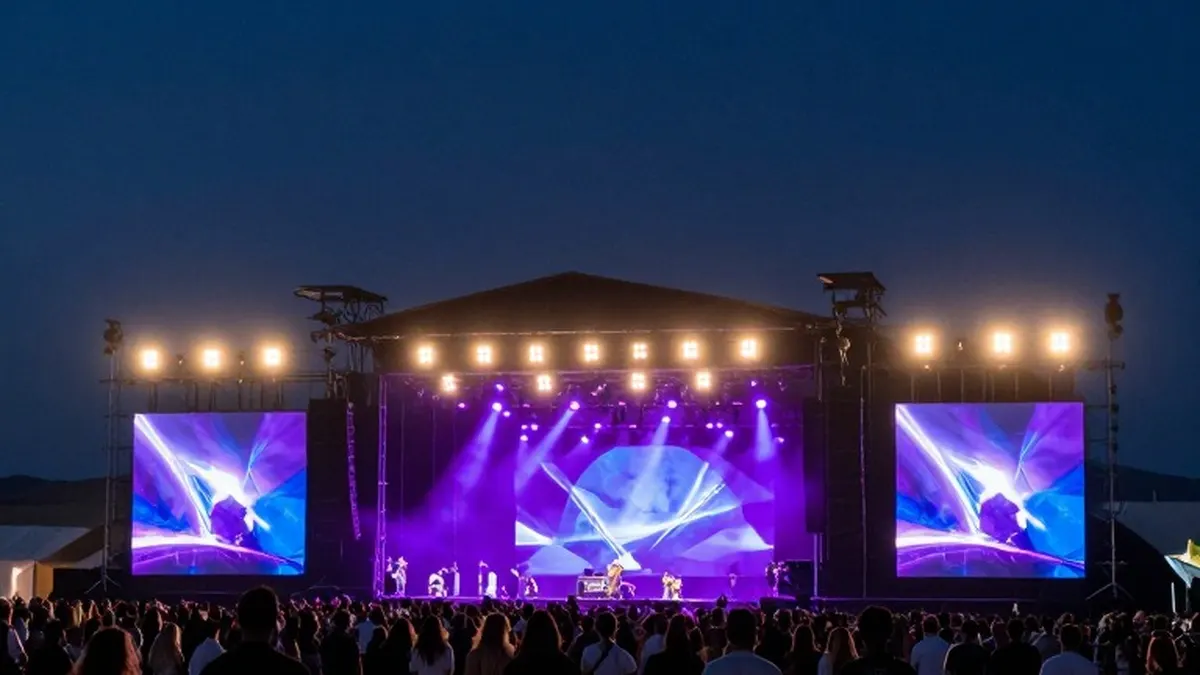
The pace of this development accelerated in 2019 with the launch of Soundstorm, the country's first major music festival. The event now attracts over 400,000 guests and international acts. MDLBEAST was established around this time, initially as the festival organizer, and has since expanded into a record label, radio station, distributor, and talent incubator. A recent report for the Saudi Music Commission suggests the sector could be worth 500 million dollars by 2034. Spotify data indicates that listeners of Saudi-made music within the country increased by 195 percent between 2020 and 2024, although international artists remain the most streamed.
Researchers argue that this growth is not organic but rather a top-down construction. Amr Abdelrahim, a researcher at Sciences Po in Paris, noted that young middle-class musicians who previously avoided official attention suddenly became central to state ambitions after 2016. He explained that the careers of these artists have become tied to the destiny of the crown prince. This represents a new level of centralization and the emergence of clientelist networks around the de facto ruler.
Observers point out that many new music businesses are vague about their state ties, though they rely heavily on government financial support and approval. A spokesperson for the human rights organization ALQST stated that almost all major events are organized or funded by state-linked entities. This influence affects the type of music produced, as musicians must be mindful of what is acceptable regarding their content, behavior, and statements to fans. ALQST believes musicians have less artistic freedom now than when they performed privately, with risks including lost contracts, performance bans, or arrest.
Mephisto, a guitarist and bassist for the Saudi black metal band Al-Namrood, explained that the music scene was previously unregulated. The band, which formed in 2008, has kept its identities secret for nearly two decades and has never performed at home. Mephisto described the current dynamic as a clear exchange: artists must follow state rules to perform. While the state does not necessarily buy loyalty, it creates incentives that make criticism increasingly costly. For a band that often condemns conservatism and politics in its music, this is a difficult position to navigate.
Nora Derbal, a professor at the University of Hamburg, found in a 2020 study that Saudi artists felt they could not refuse government project offers. They debated their cooptation and loss of autonomy. Conversely, many artists who have joined the new scene express positive views, citing the ability to play for larger audiences and earn a living. One DJ described the first Soundstorm festival as feeling like Berlin after the fall of the wall.
Fannie Agerschou-Madsen, a postdoctoral researcher at the University of Roskilde, identifies a paradox in this shift. While there are social liberalizations and challenges to conservative norms, political liberalization has not followed. However, she notes that this space allows for meaningful change. Young Saudis are aware of the red lines and continually negotiate boundaries. Their everyday practices create space for social and political change, even if it is not revolutionary.
The question remains whether the state is co-opting local musicians. MDLBEAST did not respond to inquiries on this matter. For some young Saudis, the new scene represents fun, self-expression, and creativity. For others, it is a top-down project that commodifies fun while sidestepping deeper issues of political freedom and social equity.