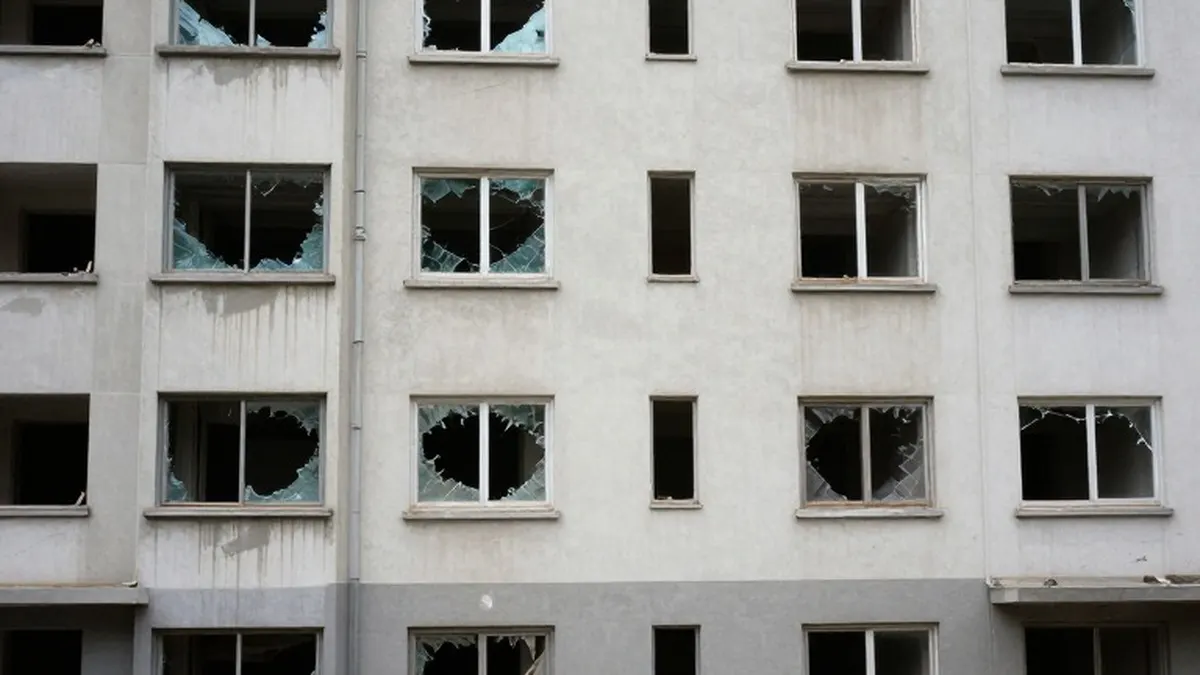
Fire and graffiti mark mosque attack in northern Israel
Police investigate the early Thursday arson of a mosque in the Dahi village, an incident that has sparked political debate over government rhetoric and minority relations.
By Ricardo Brooks ·
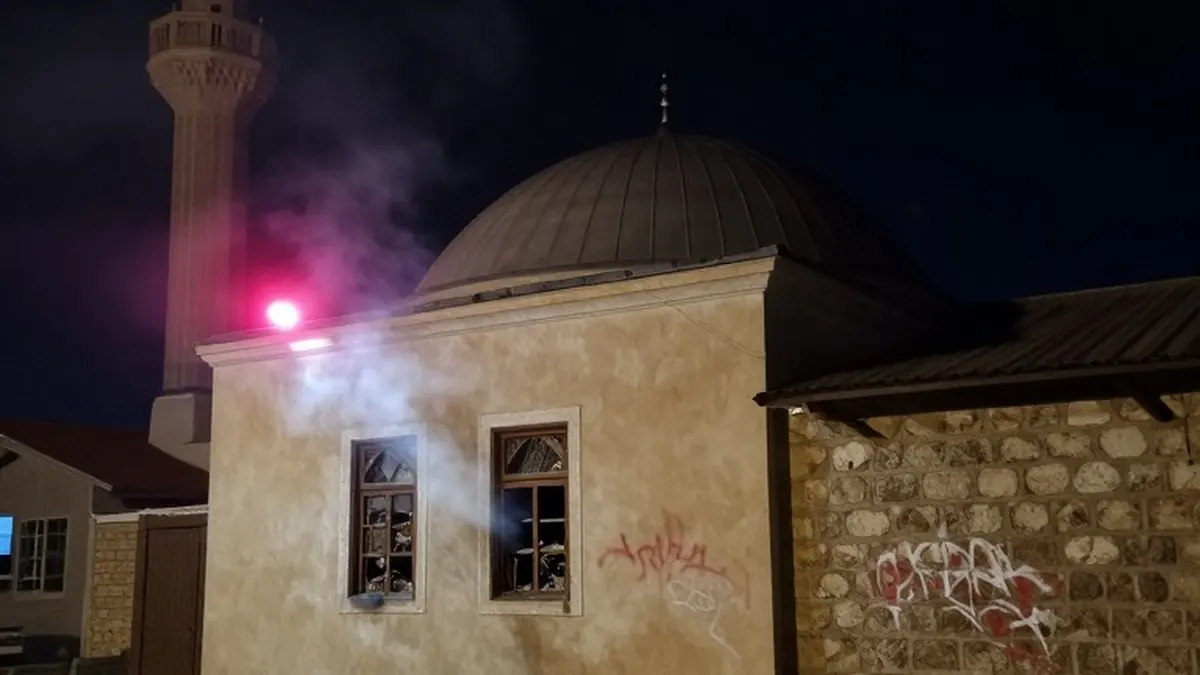
A fire ignited in the early hours of Thursday at a mosque in the northern village of Dahi, near Afula. The blaze, which resulted in visible damage to the interior of the building, was accompanied by Hebrew graffiti that critics say links the attack to pro-settler sentiment. The incident has drawn sharp criticism from Arab lawmakers and opposition figures, who have accused Prime Minister Benjamin Netanyahu and his coalition of fostering a climate of hostility toward Arab Israelis through their recent public statements.
Israel Police confirmed that they are investigating the cause of the fire in the Lower Galilee region. Graffiti found on nearby walls referenced the death of Yehuda Sherman, a West Bank settler who was killed in March after being struck by a car in a dispute. The markings also alluded to the concept of paying a price and referred to the entire land as a front. While arson against mosques in the West Bank is more common, attacks on houses of worship within the Green Line remain rare, though similar incidents have previously targeted churches inside Israel.
Security footage from a camera near the site shows three individuals carrying a container as they approach the mosque. The figures are seen disappearing around a corner and later running back in the direction from which they came. The imam of the mosque, Sheikh Khalad Zuabi, stated that worshipers arrived for morning prayers and discovered the fire. He described how three masked men emerged from a nearby forest and attempted to break through metal doors before shattering a ground-floor window to start the blaze. Zuabi noted that the damage was fortunately limited to light structural harm.
Emergency crews were called to the scene in the early morning to prevent the flames from spreading further. Following the firefighting efforts, police opened a formal investigation in coordination with the Fire and Rescue Authority to determine the truth of the matter. The Israel Police stated that they take any attempt to damage religious symbols seriously and are committed to bringing the suspects to justice. Reports from Haaretz indicate that the Shin Bet security agency is also involved in the probe.
Ahmed Zuabi, the head of the local council, described the event as a very serious incident. He suggested that the attack was a predictable outcome of the growing tension between the government and the Arab population. He urged law enforcement to identify the perpetrators and ensure they face trial. The incident occurred just hours after a separate event in the central city of Kafr Qasim, where a Jewish driver rammed a car into residents, wounding eight people in four distinct collisions on Wednesday evening.
Political reactions were swift and intense. Ahmad Tibi, a lawmaker from the Joint List, held the government politically and morally responsible for the incitement. He criticized National Security Minister Itamar Ben Gvir, who oversees the police, and called for a thorough investigation rather than a policy of leniency. Mansour Abbas, the chair of the Ra’am party, labeled the fire a hate crime and an act of terrorism against a holy site. He argued that the extreme right-wing rhetoric was a direct cause of the violence and urged the prime minister to stop legitimizing aggression against the Arab community.
Yair Lapid, a member of the B’Yachad party, described the arson as a heinous crime that contradicts both Jewish and Israeli values. He placed the burden of stopping the incitement on the prime minister and his ministers, arguing that their behavior brings shame to the state both domestically and internationally. The Jewish-Arab coexistence group Tag Meir also issued a statement condemning the act by what they called Jewish hate criminals. They linked the attack to the government’s labeling of the Arab population as supporters of terror.
The political context for the attack is the inconclusive result of the October 27 election. Netanyahu’s coalition bloc lost its majority in the Knesset, leaving opposition figures, led by Gadi Eisenkot of the Yashar party, striving to form a new government. However, they lack a majority without the support of the two Arab-majority parties, the Joint List and Ra’am. Netanyahu and his supporters have recently emphasized that Arab parties are unsuitable partners for a government, advocating instead for a unity government.