Macron warns that reducing Ukraine support risks a future conflict
The French president argues that limiting aid to Kyiv would force an unfair settlement and urges Europe to play a central role in ongoing peace negotiations.
By Amit Ricci ·
French President Emmanuel Macron issued a strong warning on Saturday regarding the trajectory of support for Ukraine. He stated that nations looking to restrict financial and material aid to Kyiv are effectively trying to impose what he called an unjust peace on the country. Macron described this approach as a recipe for another war, a scenario he insisted France cannot accept.
The remarks were posted on social media while the United States actively mediates between Moscow and Kyiv. The diplomatic efforts aim to end the conflict that began with Russia's full-scale invasion in 2022. Macron argued that those who seek to ration assistance fundamentally wish to force a settlement that benefits the aggressor at the expense of the defender.
In his statement, the French leader emphasized the broader implications for the continent. He noted that an unfair outcome in Ukraine would extend to all of Europe. According to Macron, accepting such a dynamic represents a spirit of defeat that must be avoided to ensure long-term stability in the region.
These comments follow recent disclosures by Ukrainian President Volodymyr Zelensky. On Saturday, Zelensky stated that Washington has suggested Ukraine cede territory to Moscow in exchange for joining the North Atlantic Treaty Organization. This potential trade highlights the complex negotiations currently taking place between the key global powers.
High-level diplomatic activity has intensified in the past week. US envoys Jared Kushner and Steve Witkoff met separately with both Vladimir Putin and Zelensky on Thursday. These meetings followed two days of talks in Abu Dhabi, which concluded without a major breakthrough but did produce some progress on the structure of future negotiations.
One significant outcome of the Abu Dhabi discussions was the agreement that European nations would participate more fully in future talks. To facilitate this, European leaders selected five specific countries to send representatives: France, Germany, Italy, the United Kingdom, and Poland. This group was chosen in Dublin on Friday to represent European interests in the diplomatic process.
Macron stressed that Europe must take an active and full part in the work toward a fair and lasting peace. He argued that the events unfolding in Ukraine directly concern European security. Helping Ukraine defend itself, he said, is synonymous with protecting France and its citizens.
The French president also called for Ukraine's allies to clearly articulate their postwar vision to Russia. He added that it is essential to detail expectations of the United States regarding Europe's long-term security. This clarity, Macron believes, is necessary to guide the negotiations effectively.
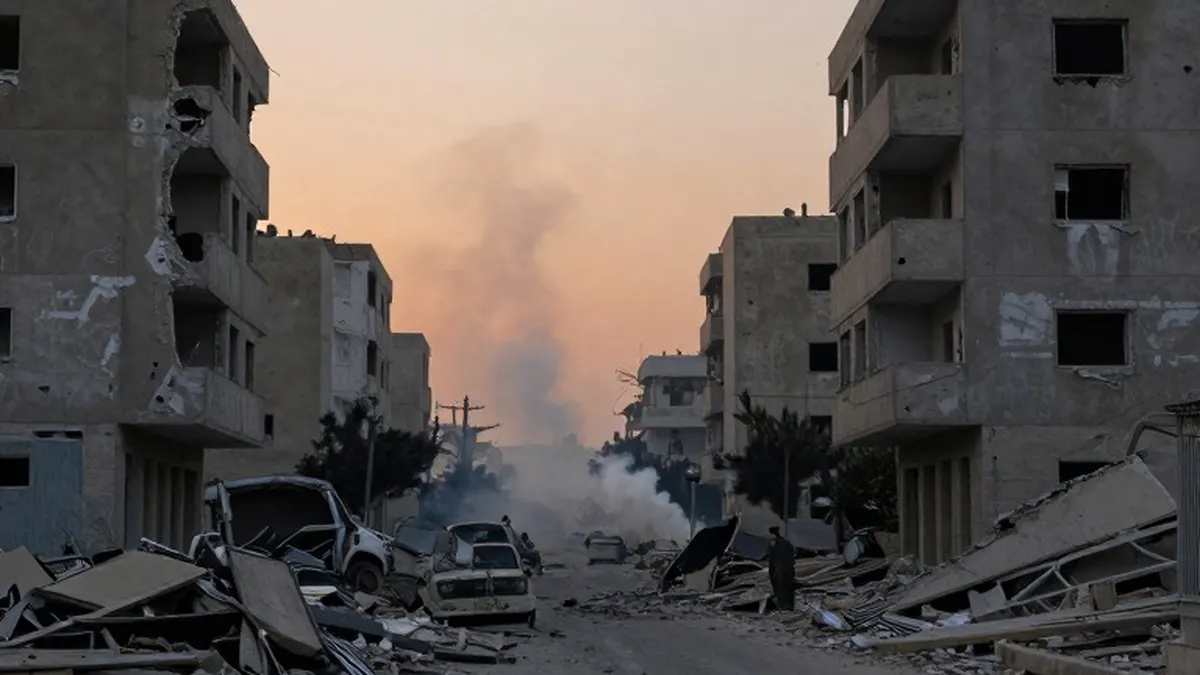
Regarding the current military situation, Macron expressed the view that Vladimir Putin is not genuinely seeking negotiation. He suggested that the Russian leader is attempting to break Ukraine by intensifying drone and missile strikes against civilian areas and energy infrastructure as winter approaches. This strategy underscores the urgency of maintaining financial backing.
Macron concluded by emphasizing the need to continue supporting Ukraine in protecting its population, power plants, and electrical grids. He argued that sustaining this aid is critical while diplomatic efforts continue to seek a resolution to the conflict.