Launch Industry Shifts: SpaceX Passes on Military Work, Miura 5 Nears Flight
US Space Force offers declined while Spain's rocket enters final assembly and Canada's Reaction Dynamics seeks $350 million.
By Ricardo Brooks ·
The US Space Force recently extended three launch contract offers to SpaceX, all of which were rejected, according to the latest Rocket Report published on October 23. The company’s response to the military bids was reportedly a direct “thanks, but no thanks.” This decision stands out because SpaceX has traditionally secured a large share of US government launch missions. The rejection leaves the Space Force seeking alternative providers for those specific payloads, potentially opening doors for domestic competitors or international firms.
In a separate development affecting civil spaceflight, a NASA safety panel issued a report on the Starship vehicle. The panel calculated that a lunar landing mission might require up to 22 refueling operations in orbit. This high number illustrates the technical demands of the proposed mission architecture. Such a requirement would necessitate a sustained and complex logistical operation in space, adding layers of risk and cost to the program's timeline.
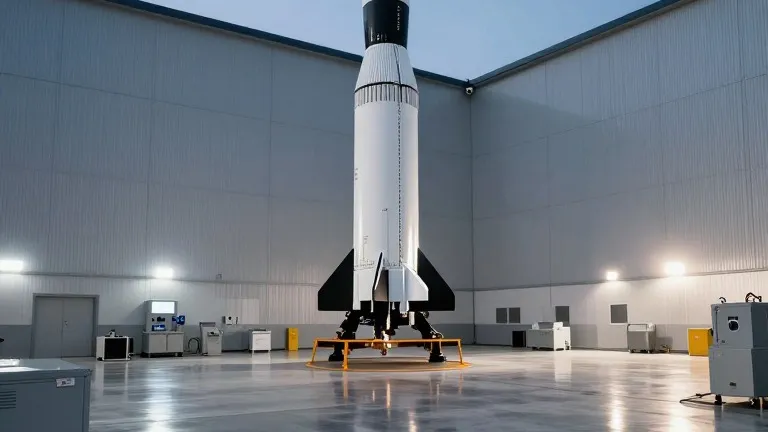
Meanwhile, the European launch market is seeing progress from a Spanish player. PLD Space, based in Spain, announced that its Miura 5 rocket is approaching final integration. The company is targeting an inaugural flight before mid-2027. This small-lift vehicle represents a new option for customers requiring access to low Earth orbit from a European base. The move places PLD Space in direct competition with established European providers.
PLD Space has completed the construction of three Miura 5 vehicles to date. CEO Raúl Torres explained on October 19 that two of these are designated for qualifying key system elements, while the third is the primary launch vehicle. Torres noted that building all three units allowed engineering teams to work continuously across different production stages. He stated that this approach let the company apply lessons learned from qualification campaigns directly to the vehicle intended for flight.
One second stage of the Miura 5 is now fully integrated at the company’s facility in Teruel. This completion allows system-level testing to begin under conditions that mimic actual operating environments. The qualification campaign for this stage includes a wet dress rehearsal and a static hot-fire test. These tests are standard procedures to verify structural integrity and engine performance before a rocket is cleared for orbit.
Across the Atlantic, Canadian launch startup Reaction Dynamics is pursuing a capital raise of $350 million. The funds would support an expansion of the workforce from its current 68 employees to more than 350. Reaction Dynamics is developing the Aurora, a small-lift rocket targeted to reach orbit in 2028. The company has also outlined plans for a medium-lift vehicle named Borealis, with a debut targeted for 2031.