Trump Acknowledges Psychological Challenges of Nuclear Disarmament with China and Russia
US President Donald Trump stated that while he supports limiting nuclear weapons, the psychological difficulty of negotiations with China and Russia makes the process complex following a trilateral summit in Shenzhen.
By Amit Ricci ·
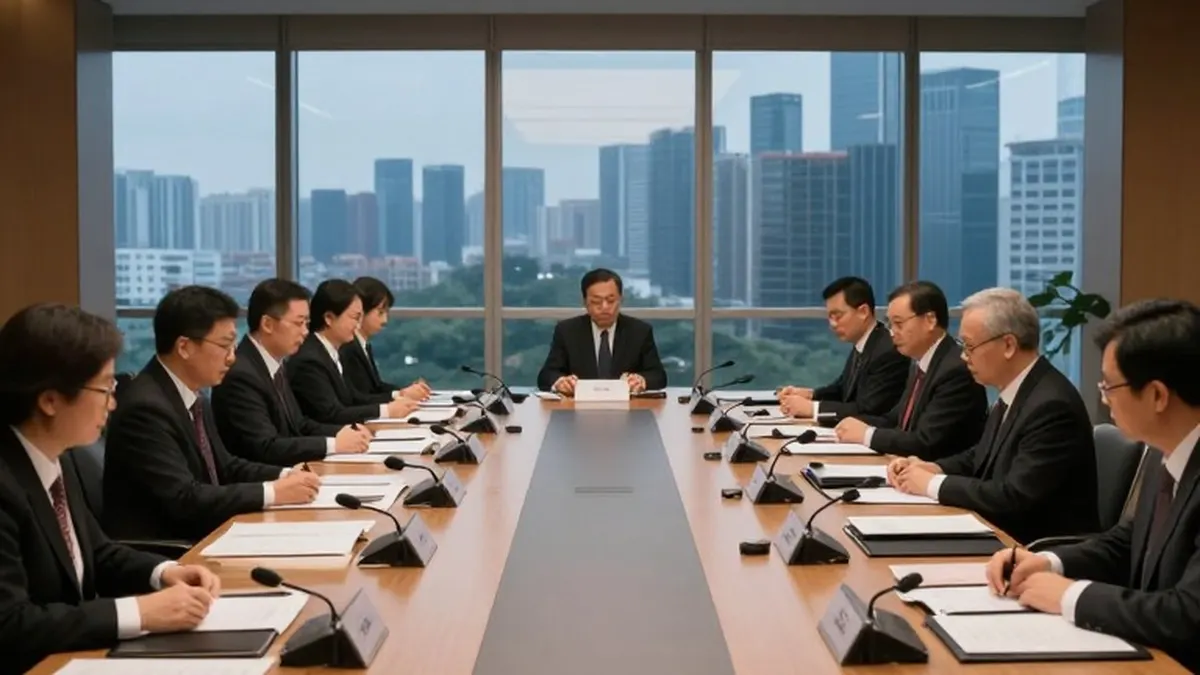
US President Donald Trump indicated that reaching a mutual agreement on limiting nuclear weapons would be a difficult undertaking, though he expressed intent to continue pursuing the goal. These remarks came in the wake of a significant diplomatic event held on November 19, where Trump met with the leaders of China and Russia in Shenzhen for the first time in a trilateral summit format.
Speaking by phone to Reuters while returning to Washington from China, the US president offered insight into the complexities of the negotiations. He described the concept of nuclear disarmament as one he personally enjoys but noted that the pure mechanics of negotiation present significant hurdles for him in his role as president.
Trump specifically highlighted the psychological barrier inherent in such discussions. He explained that it is challenging to communicate to other nations that they should surrender a substantial portion of their arsenal. In his words, it is very difficult to tell a country that it has four thousand nuclear weapons and that it will give up half of them. He characterized this process as psychologically hard to execute.
Despite these challenges, the US president noted that Chinese leader Xi Jinping generally agreed with the concept of limiting nuclear weapons. However, Trump acknowledged his understanding of why putting this agreement into practical application might prove to be a complicated task for all parties involved.
The summit in Shenzhen marked a historic occasion as it was the first instance of a three-way meeting involving the leaders of the United States, China, and Russia. During the proceedings, Xi Jinping proposed a set of rules governing the coexistence of major powers. One of the key provisions in this proposal called for the ultimate elimination of all nuclear weapons from the globe.
Following their discussions, the three leaders agreed to issue a joint declaration aimed at promoting peace. The document emphasized a shared understanding that a nuclear war cannot be won, which served as the basis for their commitment to engage in ongoing dialogue regarding the reduction of nuclear risks.
Trump stressed that he would continue to raise the issue of nuclear limitations despite the difficulties. He reiterated that while the process is hard to do psychologically, it remains a necessary objective for global security. His comments underscore the delicate balance between political ambition and the practical realities of international diplomacy in an era of advanced military capabilities.
The interaction between the three world powers in Shenzhen highlights a renewed focus on strategic stability. By agreeing to dialogue on reducing nuclear risks, the leaders have set a foundation for future negotiations. The outcome of these talks will be closely watched by global observers as they assess the potential for a more stable international security landscape.