Israel's Political System Keeps Resisting Reform Despite Decades of Warnings
Thirty five years of research and recommendations by the Israel Democracy Institute have done little to fix the structural flaws laid bare by the 2026 Knesset elections, says the head of its political reform program.
By Olga Menon ·
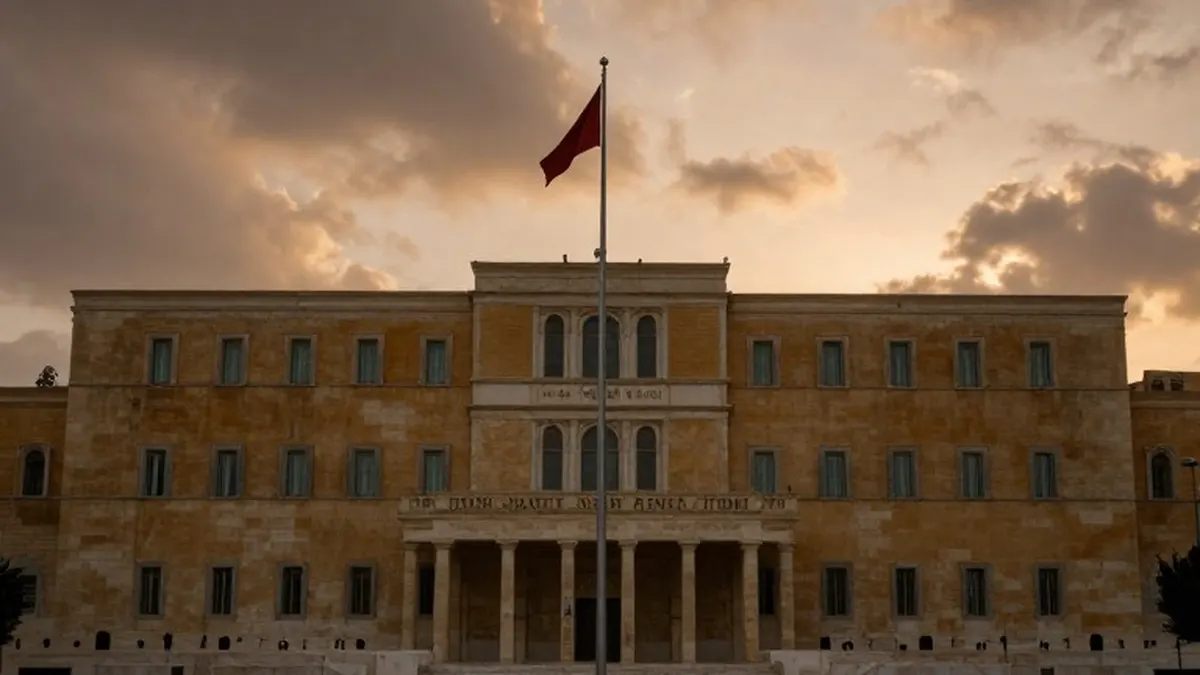
Israel's 78 year old political system has been compared to an old, inherited pair of shoes: they pinch whenever you stand up and walk, offer little protection in the mud, and it is unclear whether they can be repaired or replaced. The October 27 Knesset elections showed, more than ever, how dysfunctional and ill suited the system is to the country's unique governance challenges.
For 35 years, the Israel Democracy Institute has studied, warned and proposed reforms, presenting its research to politicians, academics and the public. Founded in 1991 by political reform expert Dr. Arye Carmon, who served as its president until 2014 and received an Israel Prize in 2009, the nonpartisan think tank works with government, decision makers and the civil service to improve the functioning of state institutions and foster solidarity in Israeli society. Yet the gap between diagnosing the system's failures and persuading those who run it to change it remains enormous.
Dr. Assaf Shapira, who heads the institute's Political Reform Program, told The Jerusalem Post in an interview that the erosion of party platforms is part of a global shift. A week before the election he told the online edition of Davar that voters no longer know exactly what parties stand for. 'Politics has become less ideological and more personal. We feel this especially in Israel, but it is happening all over the world,' he said, noting that the old divide between socialist left and capitalist right over welfare, education, housing and healthcare has faded.
Social media has accelerated the trend, Shapira said, especially among young people who do not watch serious news broadcasts, with candidates forced to explain complex issues in a few seconds. But he argued the phenomenon is worse in Israel because of sector based voting. 'Israeli politics has always been tribal,' he said. 'But in recent years, the tribal dimension has become stronger than ever, and it's much more difficult to persuade voters to change their minds.' Demographic change has deepened the divide, he added, saying: 'I don't know how we can fight tribal politics.'
Asked about the system's most serious structural weaknesses, Shapira listed the lack of checks and balances on government, the absence of midterm elections, the lack of a second legislative house and the lack of a formal constitution. Basic Laws can be changed by 61 MKs or even a simple majority, and the judiciary, the only effective institution limiting the government, has been under major attack from it. 'Accountability doesn't exist in Israel,' he said, contrasting that with Spain, where Transport Minister Óscar Puente resigned on November 3 following a deadly high speed train crash that killed 69 people, an acceptance of political responsibility despite not bearing direct blame for the accident.
Shapira has long advocated a 'semi-open ballot,' the most common electoral model among developed democracies and used in countries such as the Netherlands, Belgium, Sweden, Austria, Iceland and the Czech Republic. Instead of voting only for a party, voters would mark several candidates on the party's list, and those receiving substantial personal votes could move up the list, strengthening voter influence and accountability. He warned that if Israel keeps its current arrangements for another 10 years, the quality of its democracy and its ability to govern itself will suffer, and that populist agendas 'might cause more damage in Israel than elsewhere because we don't have checks and balances. If the judicial system falls, there will be no checks and balances.'
On term limits for prime ministers, Shapira said he is not opposed but considers them weak medicine: 'Any law can be changed. If a prime minister nears his term limit, he could change the law. We need a constitution.' Instead, he favors requiring a special majority, perhaps 70 or 80 MKs, to amend Basic Laws, since both coalition and opposition have altered them for their own benefit. He acknowledged the 'paradox of electoral reform,' that politicians elected under the current system have little reason to change it, and said he does not see the public pressure that might force their hand right now.
Shapira also conceded the institute's own missteps, including past support for raising the electoral threshold beyond 3.25 percent, which it dropped after concluding it would lead to parties headed only by the rich. He counts the institute's warnings against the government's judicial overhaul and its push for a political committee of inquiry into October 7 as successes. Still, he is not entirely pessimistic: 'Our economy is quite stable, but potential damage is not irreversible. However, four more years of illiberal government will make the damage more serious.'