Baghdad issues sweeping orders to control Kurdish oil and border operations
The Iraqi Prime Minister has directed federal agencies to assume management of oilfields and border crossings in the semi-autonomous Kurdistan region, a move that could intensify long-standing disputes between Baghdad and regional authorities.
By Amit Ricci ·
Iraq’s Prime Minister Ali al-Zaidi has issued a directive requiring the federal Ministry of Oil to take charge of oil operations in areas currently under the security control of the Kurdistan Regional Government. This significant administrative shift has the potential to escalate friction between the national government in Baghdad and the semi-autonomous region in the country's north, which has long sought greater autonomy over its natural resources.
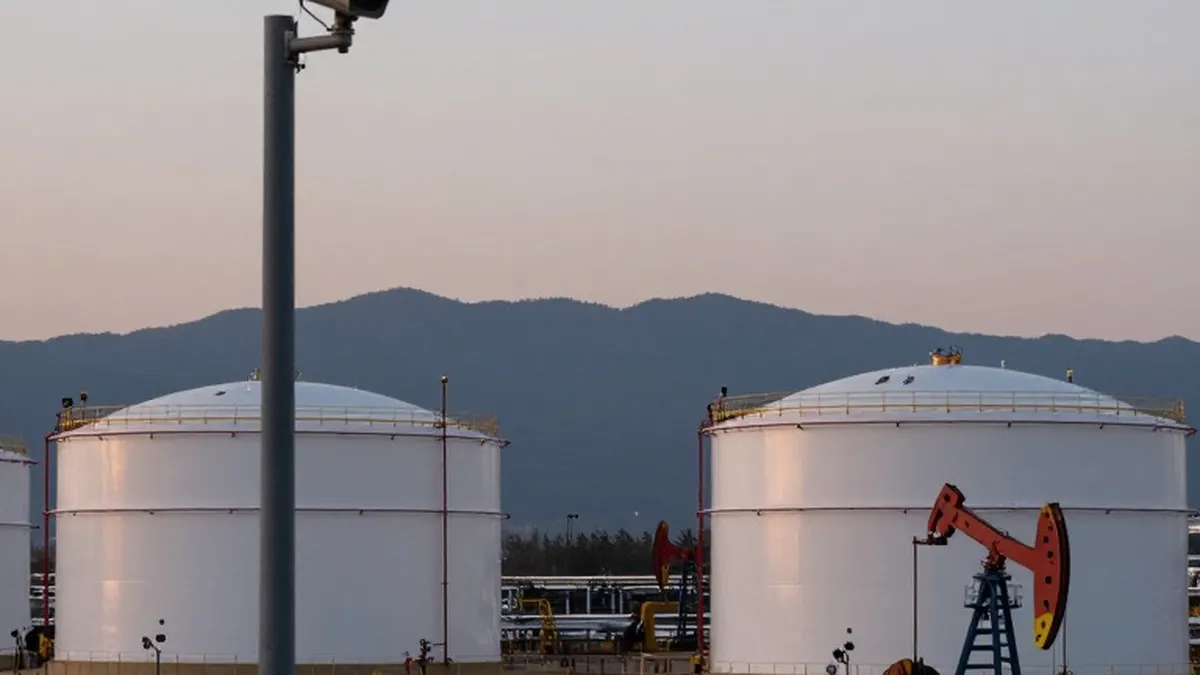
According to a statement released by the Prime Minister's office on Tuesday, the order specifically targets oilfields located in the provinces of Diyala, Kirkuk, Salahuddin, and Nineveh. The federal government intends to secure and monitor all these sites using camera systems. This includes fields that fall within the administrative boundaries of the federal government but are currently under the security authority of the regional administration.
Beyond oil production, the directive addresses the movement of goods and people across international boundaries. Al-Zaidi has instructed the border crossings authority to assume control of all entry and exit points within the Kurdish region. Furthermore, the regional government has been directed to approve exports of crude oil and petroleum products exclusively through the federal Ministry of Oil, centralizing oversight of the sector.
The statement detailed specific operational changes for border security. It noted that the Border Forces Command is responsible for closing unofficial crossings along international borders with neighboring countries, including those situated within the Kurdistan Region. Additionally, all seasonal roads connecting the four specified governorates to the Kurdish region are to be closed to standard traffic.
Mahmoud Abdelwahed, reporting for Al Jazeera from Baghdad, suggested that these recent developments could worsen existing tensions. The core of the dispute involves control over oil extraction and marketing, as well as the equitable sharing of budgetary resources between the national and regional governments.
Abdelwahed highlighted the federal government's desire to maintain all oil excavation and marketing activities under the purview of its state organization, the State Organization for Marketing of Oil. He noted that this approach has been firmly rejected by the Kurdish region, which prefers to manage its own export channels.
The current standoff follows a lengthy period of disagreement. A dispute over Kurdish authorities selling oil without explicit approval from Baghdad previously halted pipeline shipments to Turkiye for more than two years. The two sides eventually reached an agreement in September 2025 to restart these shipments, but underlying tensions remain unresolved.
In parallel personnel changes, Al-Zaidi removed the head of the border crossings authority from his position. Additionally, the director general of the North Oil Company, along with his deputies, have been suspended pending a further investigation, according to reports from Iraq’s state news agency.
In a separate matter related to the oil sector, Iraqi officials have accused Kataib Hezbollah, an armed group with strong ties to Iran, of operating an oil smuggling network. The group is accused of running these operations in its stronghold of Jurf al-Sakhar, located south of Baghdad. The group has publicly denied the accusations.