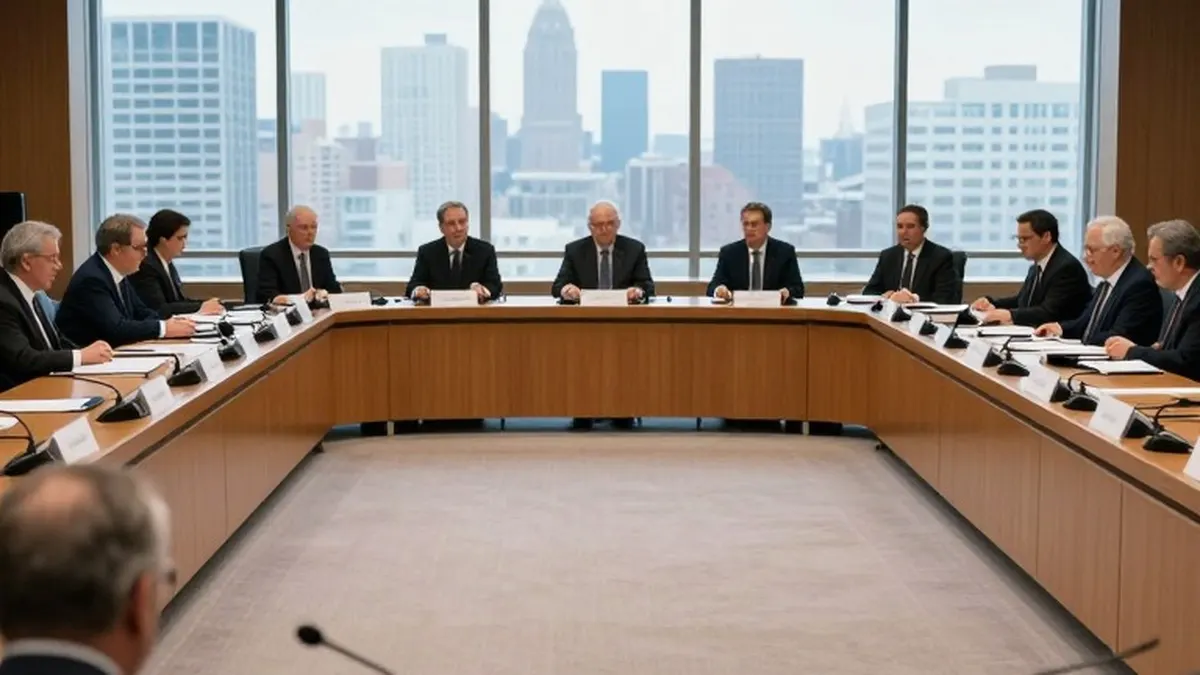
Iran Pursues War Crimes Claims in American and European Courts
Tehran has initiated legal proceedings in the US and four European nations to seek accountability for the ongoing conflict, including the deadly strike on a school in Minab.
By Amit Ricci ·
Iran has formally launched legal actions in the United States and four European countries to address alleged war crimes committed during the current conflict with the US and Israel. Vice President for Legal Affairs Majid Ansari announced on Sunday that these proceedings cover multiple incidents, most notably the missile strike on a primary school in Minab in February that killed at least 178 people, the majority of whom were schoolgirls. The lawsuits also encompass the assassination of Supreme Leader Ayatollah Ali Khamenei, as well as the deaths of scientists, military commanders, and civilians. Additionally, the claims address damage to civilian infrastructure, including hospitals, ambulances, and emergency facilities.
While the specific courts have not been publicly named, Ansari stated that the cases were filed in jurisdictions that accepted authority over the matters. His office is collaborating with the justice and foreign ministries to pursue these claims under international law. Experts suggest that the European route may offer a more viable legal path compared to the United States, where jurisdictional hurdles are significant. Saeed Bagheri, an assistant professor in international law at the University of Reading, noted that Iran is seeking accountability and preserving evidence, though compensation remains uncertain.
Tehran’s strategy is driven by limited access to international tribunals. Iran is considering filing a case with the International Criminal Court, but because it is not a signatory to the Rome Statute, it would require an independent basis for jurisdiction, such as a referral by the UN Security Council. Similarly, the International Court of Justice requires state consent for jurisdiction. Bagheri emphasized that Iran cannot simply demand a hearing in either body without meeting these specific legal prerequisites.
The legal campaign is part of a broader effort that includes complaints filed in March at the Iran-US Claims Tribunal in The Hague. That initial complaint accused Washington of military aggression and illegal sanctions. Preparations are now underway for a second complaint regarding the current war. Domestically, the Iranian judiciary has indicted 159 senior US and Israeli officials and filed approximately 400 cases, including one with 350,000 plaintiffs. Local courts have demanded 290 billion dollars in damages from the United States. A separate civil suit was also filed in the US by the National Iranian American Council Action alongside Iranian plaintiffs, seeking a ruling that the military campaign was unconstitutional.
The Minab school bombing serves as a central pillar of Iran’s case. A September report by a UN Independent International Fact-Finding Mission concluded that the US likely committed war crimes by striking the school. The mission found that the school’s civilian nature was apparent, and visual evidence showed children in the courtyard. Bagheri explained that proving a war crime requires establishing who carried out the attack, what was targeted, and what decision-makers knew at the time. Key evidence would include targeting files, intelligence assessments, and collateral-damage estimates.
In the US, Iran faces serious obstacles, primarily sovereign immunity under the Federal Tort Claims Act, which excludes claims arising from combatant activities during wartime. Bagheri noted that while the US War Crimes Act allows for prosecution, only US prosecutors can initiate federal criminal cases. In Europe, the principle of universal jurisdiction allows prosecutors to pursue serious international crimes regardless of where they occurred. Many EU member states have used this principle to secure convictions in recent years, though requirements vary by country.
Individual criminal responsibility can extend to those who ordered, carried out, or assisted in crimes, as well as commanders who failed to prevent them. Bagheri stated that rank alone is not decisive, but rather the authority exercised and knowledge possessed. However, serving heads of state may retain functional immunity in foreign courts. The case of Ayatollah Khamenei is particularly complex, as his status under the Iranian Constitution does not automatically determine if he was a lawful target, depending on his actual military role at the time of the attack.
Despite the difficulties, Bagheri believes these proceedings serve the important purpose of preserving evidence and establishing legal responsibility. He noted that an arrest warrant does not guarantee detention, and Interpol Red Notices are not international arrest warrants. Securing compensation may prove even harder than obtaining a judgment, as state property is often immune from seizure and US sanctions complicate payments. Nevertheless, Iran continues to push for legal recognition of the violations committed during the war.