Europe gathers in Berlin to define Ukraine's defence future
European leaders convene in Berlin to secure funding for Ukraine and assert a role in peace talks while the US and Russia meet in China.
By Amit Ricci ·
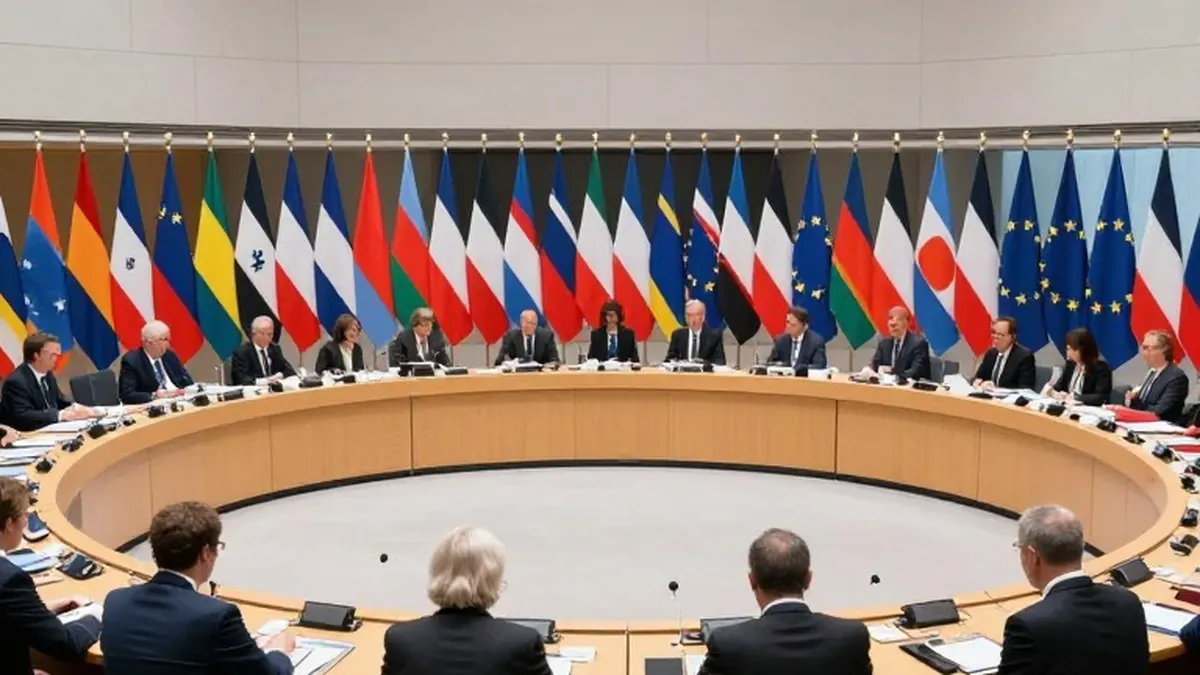
European leaders are gathering in Berlin to finalize funding commitments for Ukraine and press for a significant role in ongoing peace negotiations. This diplomatic push comes as US President Donald Trump meets with Russian President Vladimir Putin in China, a development that highlights the shifting dynamics of the transatlantic alliance.
German Chancellor Friedrich Merz is hosting the Coalition of the Willing summit alongside French President Emmanuel Macron and UK Prime Minister Andy Burnham. More than thirty leaders are expected to attend the event, including Ukrainian President Volodymyr Zelenskyy. The primary agenda focuses on establishing long-term security guarantees and ensuring continued military and financial support for Kyiv.
Zelenskyy has identified air defence as his immediate priority as Ukraine prepares for winter. The country faces a looming threat of drone attacks from Moscow, making robust defensive systems a critical need for the coming months.
US envoys Steve Witkoff and Jared Kushner are also expected in Berlin. They will meet with Ukrainian officials and a newly formed European negotiating team. This team includes representatives from France, Germany, the United Kingdom, Italy, and Poland, as well as European Commission President Ursula von der Leyen and European Council President Antonio Costa. Washington has backed European participation in the next round of talks, although Moscow has yet to formally agree.
The European Commission proposed an additional 45 billion euro loan for 2027 on Wednesday. This package includes up to 25 billion euros for military aid and 20 billion euros for budget support. This proposal follows a 1.71 billion euro payment made on Monday under an existing loan designated for drones, ammunition, and air defence systems. Even with the new loan, a financing gap of 25 billion euros remains for next year.
Tensions between European and US officials have recently surfaced. At a NATO meeting in Brussels, Pentagon undersecretary Elbridge Colby argued that Ukrainian strikes deep inside Russia had limited impact on Moscow's advances. German Defence Minister Boris Pistorius called this assessment quite a stupid thing, while UK Defence Secretary Wes Streeting supported Ukraine's right to decide its own strategy.
After a nine-month pause, US, Ukrainian, and Russian officials resumed talks in Abu Dhabi last week. Subsequent meetings between US envoys and Putin in Moscow confirmed that Europeans would join the next round of discussions, despite initial resistance from Moscow. This development has generated renewed energy within Europe regarding the bloc's involvement in the negotiations.
Sharon Hudson-Dean of the Center for European Policy Analysis noted that success in Berlin would involve firmer commitments to Ukraine's defence and budget. She emphasized that Washington should recognize Europe's role in shouldering the financial and security burdens of any settlement. European leaders want to be involved in the decision-making process rather than just reacting to outcomes.
In preparation for the summit, European allies have pledged additional winter aid, including fighter jets and air defence missiles. Zelenskyy urged allies to release Patriot and IRIS-T interceptors from their stocks, offering to replace them with missiles currently on order. He also requested forty more F-16 fighter jets.
Germany and Norway each announced 300 million dollars for the Prioritised Ukraine Requirements List, a NATO-coordinated programme for purchasing US weapons. Several other European nations, including the UK, Denmark, and France, have pledged further funding. However, some internal divisions remain, with Poland stating it will not add new money to the PURL at this stage and several Central European countries indicating they will opt out of the next round of EU financing.