Family of Palestinian photojournalist calls for release after dawn arrest
The family of Mohammed Atiq has requested the disclosure of his location and his immediate release following a military raid on his home in Burqin.
By Amit Ricci ·
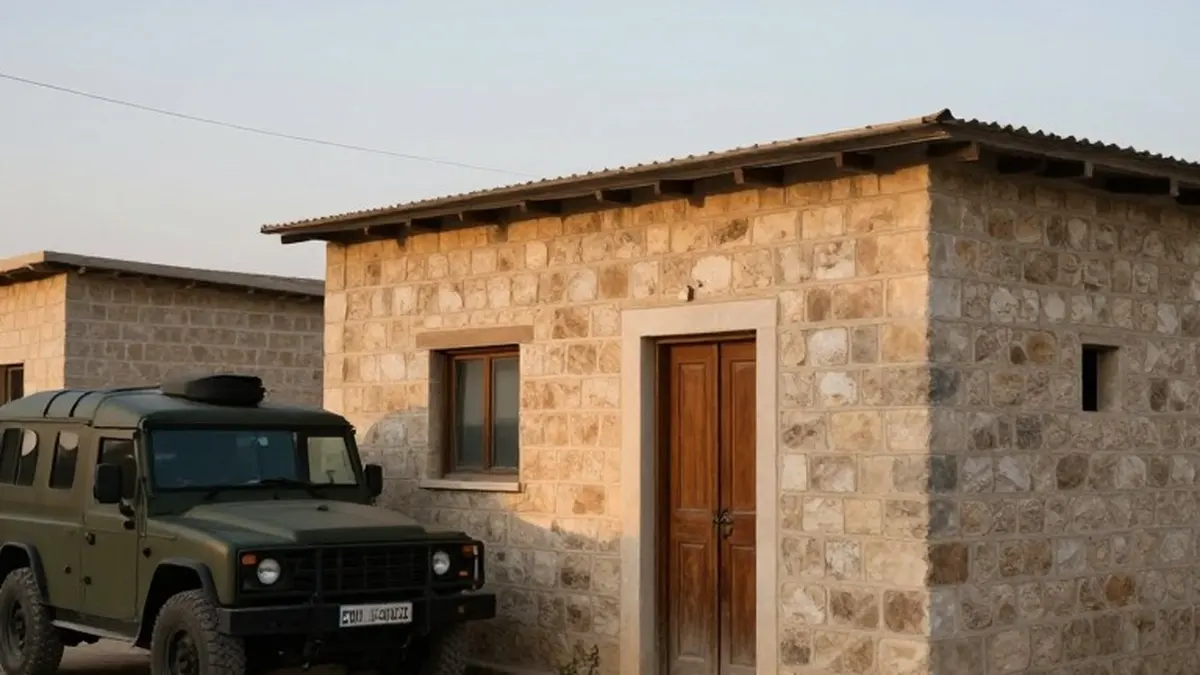
The family of Palestinian photojournalist Mohammed Atiq has formally demanded that authorities disclose his place of detention and secure his release. Atiq was taken into custody by Israeli soldiers during a dawn raid on his residence in Burqin, a town located west of Jenin. The military unit forced entry by blowing open the door and conducted a thorough search of the property before transporting the journalist to an undisclosed location. As of now, his relatives have not received concrete information regarding his whereabouts or the specific conditions of his holding.
Ahmed Atiq, the journalist's father, stated that the family remains in the dark about his son's fate. He noted that the military liaison office has informed the household that they are closely monitoring the case and will provide updates as they become available. According to the father, soldiers told Atiq's wife to dress quickly as she was also scheduled for arrest. Female soldiers entered the home but departed after learning that the wife was eight months pregnant. The father added that while the raid caused minor damage to some household items, including a camera that was thrown outside, the family believes Atiq was not physically beaten during the incident.
Atiq, who is 32 years old, works as a photojournalist for several international media outlets, including Middle East Eye. This is not his first encounter with military detention. He was previously arrested in 2016 and has faced multiple other detentions at checkpoints and while filming on location. In a separate incident about a month prior to this latest arrest, he was detained for several hours while documenting the olive harvest in the village of Anza, which is near Jenin.
The arrest of Atiq occurs against the backdrop of a broader campaign targeting Palestinian journalists. Omar Nazzal, a member of the general secretariat of the Palestinian Journalists Syndicate, reported that approximately 210 journalists, including about 23 women, have been arrested since October 7, 2023. Nazzal described these actions as a systematic effort to hinder journalistic work and prevent the reporting of events on the ground.
The Palestinian Prisoners' Club (PCC) has confirmed that 38 journalists, including five women, are currently held in Israeli occupation prisons. The organization highlighted that two journalists from the Gaza Strip have been subjected to enforced disappearance since the start of the current conflict, with no clear information available about their status. Additionally, the PCC noted that more than 260 journalists have been killed in attacks within Gaza.
According to the PCC, Israeli authorities often utilize pretexts such as allegations of incitement and the existence of secret files to justify targeting journalists. Administrative detention and the military judicial system are frequently employed to keep journalists in custody without fair trials or standard legal safeguards. The organization stated that imprisoned journalists face violations that include physical assault, torture, and harsh detention conditions, which constitute breaches of international humanitarian and human rights law.
One prominent case involves journalist Bushra al-Tawil, who has been kept in isolation by the Israeli Prison Service for over two months. Her conditions of detention include frequent cell raids, physical abuse, the use of tear gas, and constant surveillance. Her legal counsel has also faced obstacles when attempting to visit her.
Nazzal explained that the Journalists Syndicate is addressing these cases through two primary approaches. The first is legal, involving coordination with prisoner advocacy entities and the assignment of four specific lawyers to handle cases before Israeli courts. Each lawyer follows a specific journalist based on their detention location. The second approach involves international advocacy, where periodic reports on detention conditions are submitted to bodies such as the International Federation of Journalists and relevant United Nations agencies.
While these efforts sometimes elicit statements or letters from international institutions demanding releases or clarifications, Nazzal emphasized that tangible results on the ground have been limited. He described the confrontation with these policies as a long-term struggle that requires sustained union, legal, and international pressure on press freedom institutions.
According to the latest statistics from Palestinian prisoners' institutions, the total number of Palestinian prisoners and detainees in Israeli prisons reached approximately 9,300 as of early November 2026. This figure includes around 90 female prisoners and more than 350 children. The count also comprises over 3,000 administrative detainees and 1,419 detainees from the Gaza Strip classified as unlawful combatants. These numbers do not account for all detainees held in military camps and detention centers under the control of the Israeli military.