Asian equity markets slide as AI investment sustainability concerns intensify
Stock indexes across the Asia-Pacific region fell sharply on Monday, extending a week of losses driven by fears that the artificial intelligence boom may be losing momentum.
By Amit Ricci ·
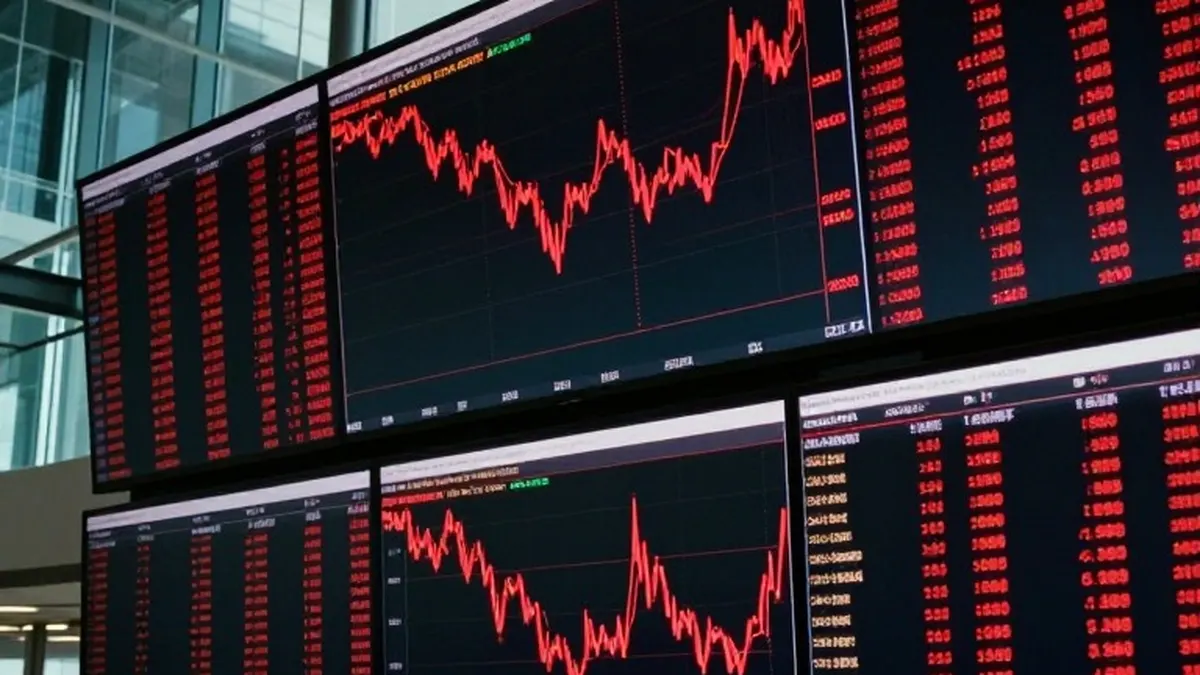
Asian stock markets opened with significant declines on Monday, November 23, as investors grew increasingly wary of the long-term viability of the current artificial intelligence surge. The downturn continued a trend established over the previous weekend, which saw a tech-led sell-off that affected both Asian and American markets.
Major benchmarks in the region reflected this pessimism. The Korea Composite Stock Price Index, or Kospi, dropped as much as 4.3 percent during early trading hours. In other parts of the region, the Taiwan Stock Exchange Capitalization Weighted Stock Index and the Hang Seng Index in Hong Kong both fell by more than one percent. Japan's markets remained closed for the day due to the Labor Thanksgiving Day holiday.
The losses on Monday follow a particularly rough week for global tech stocks. On Friday, the S&P 500, the primary benchmark for US stocks, closed 3.7 percent lower, marking its seventh consecutive session of losses. The tech-heavy Nasdaq Composite experienced an even steeper drop of 5.3 percent, a decline that wiped out all gains the index had recorded in 2026.
Asian markets had also been under pressure before the weekend. The Kospi, the Nikkei 225, and the Taiex all finished the trading week between 5.1 percent and 6.2 percent lower. The Hang Seng Index concluded its session down 1.9 percent, signaling broad-based weakness in the sector.
The core of investor anxiety lies in the massive capital expenditure required to maintain the AI infrastructure. There is a persistent concern that technology companies may struggle to justify or sustain the multi-trillion-dollar investments needed to train and operate these complex systems. The scale of this spending is substantial, with much of it being financed through debt.
According to data from the technology insights firm Gartner, global investment related to AI is projected to reach $2.7 trillion in 2026. This figure is expected to climb further to $3.6 trillion in 2027, highlighting the sheer magnitude of the financial commitment involved in the sector.
These financial worries have been compounded by a growing demand for stricter regulatory oversight of the industry. Political developments in the United States are influencing market sentiment, particularly regarding the construction of new data centers. The sweeping victory of the Democratic Party in recent US midterm elections is expected to slow down these construction projects in various states.
Additionally, the sector is dealing with specific corporate and geopolitical challenges. An alleged espionage scandal involving chip manufacturer Nvidia and its former CEO, Jensen Huang, has gained traction. This controversy has fueled a push for tighter restrictions on China's ability to access advanced semiconductor technology, adding another layer of uncertainty to the market.