Army halts Iowa chemical blast pending court ruling
President Trump ordered the military to wait for the Eighth Circuit Court of Appeals to decide on an EPA emergency permit before detonating degraded lead azide in Middletown.
By Ricardo Brooks ·
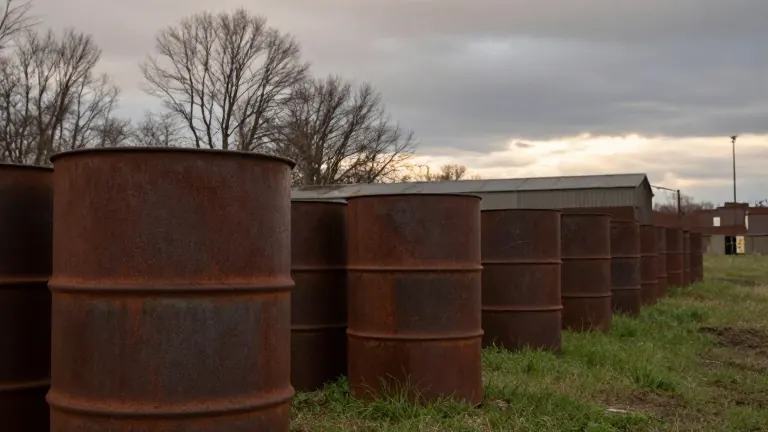
President Donald Trump ordered the U.S. Army to pause its plan to detonate degraded bomb-making chemicals in Iowa until a federal appeals court rules on an emergency permit. The president posted on social media on Monday that he defers to the Eighth Circuit, marking a shift in the administration's approach to the hazardous material stored at the Iowa Army Ammunition Plant.
The Army originally scheduled the detonation of 68 barrels of lead azide for Friday. Officials have since moved the date three times due to public concern and weather conditions. The most recent target was Wednesday, which military planners identified as having the most favorable wind patterns for the operation.
Environmental groups sued last week to stop the detonation and secured a temporary stay from the appeals court. They are challenging an emergency permit granted by the U.S. Environmental Protection Agency that authorized the explosive removal of the material. Trump stated that if the incoming governor and the court do not agree to proceed, the administration will not move forward and will hold the new leader responsible for any resulting damage.
Incoming Governor-elect Rob Sand said on Sunday that the situation has become more dangerous than it should be. He questioned why a contract to remove the explosive risk was previously canceled and criticized the timing of the demolition in late November. Sand called for all federal, state, and local resources to focus on protecting residents who could be affected by the blast.
Residents near the plant in Middletown have begun sealing windows and doors to prevent lead dust from entering their homes. Officials have advised people to stay indoors during the detonation and to wash outdoor surfaces with water afterward to reduce exposure. Lead is toxic, and officials are monitoring the potential path of any chemical plume based on wind shifts.
Army Col. Aaron Teller, a munitions emergency response specialist, filed a court declaration explaining the urgency of the plan. He noted that as liquid levels in the barrels drop, the remaining solution is more likely to freeze. This freezing process creates crystals around the rims and undersides of the lids, which can trigger an explosive chain reaction from minimal friction. Teller stated that the risk of an uncontrolled explosion grows as temperatures drop below 30 degrees Fahrenheit.
Rachel Rintelmann, an attorney with the environmental group Earthjustice, said Trump's decision adds confusion to a chaotic situation for impacted communities. She noted that her team is still assessing how the presidential order affects the ongoing legal case. The Army previously considered chemical neutralization but rejected it because handling the drums would increase the chance of a fatal accidental detonation.