French police face scrutiny over heavy weapon use in new protest wave
Viral videos and expert analysis raise questions about the French police's reliance on stun grenades and rubber bullets during recent demonstrations.
By World Press Post Staff ·
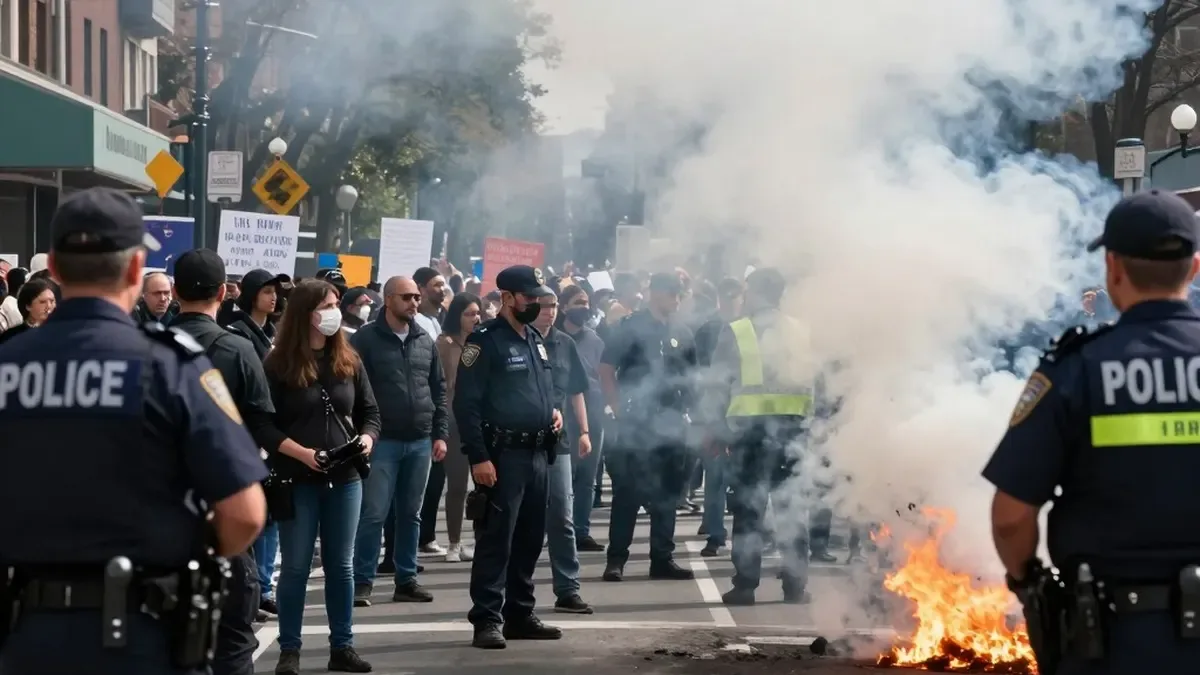
A fresh wave of protests has swept through France, drawing intense focus to the conduct of the country's police force. As videos of alleged misconduct circulate rapidly on social media, the public and rights organizations are questioning whether French officers are employing excessive force. Footage shared online depicts several distressing incidents, including an officer dragging an unconscious man and another grabbing a young protester by the neck. In another clip, a woman is seen being removed with her arm twisted behind her back while she screams in pain. Although these specific videos have not been independently verified, they have fueled a growing debate about policing methods in the country.
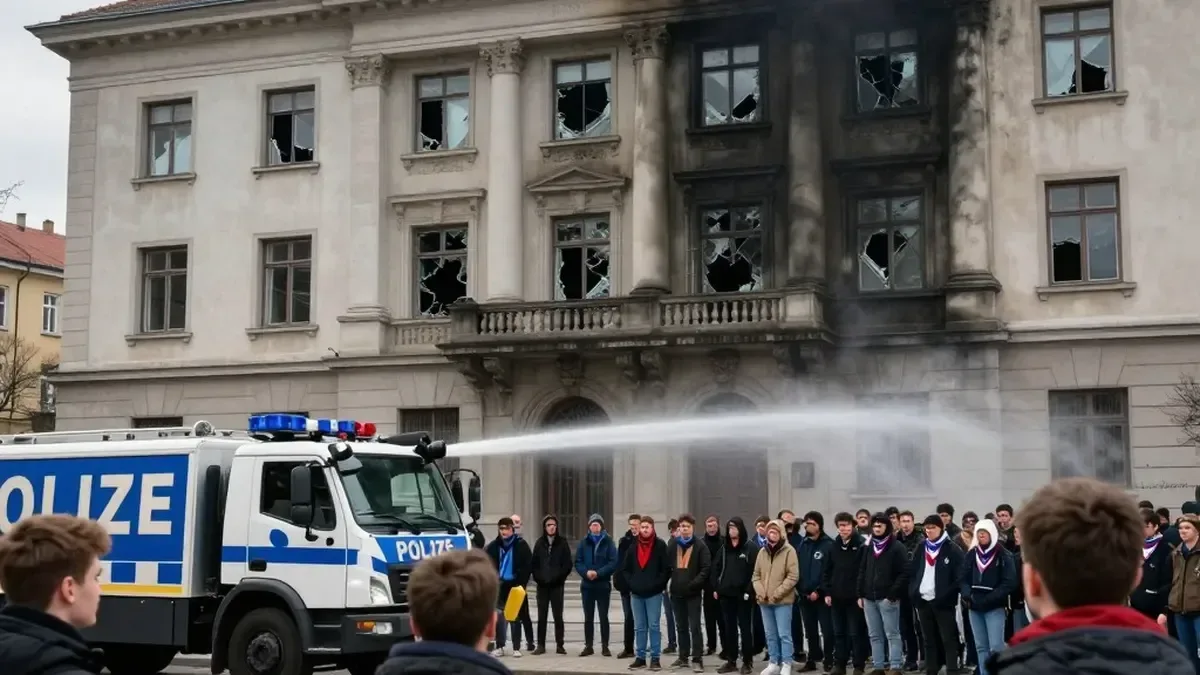
The demonstrations, which began with high school students barricading buildings to protest teacher shortages and crumbling infrastructure, expanded significantly on Saturday. More than half a million people joined the marches, primarily to voice concerns over public sector cuts and the rising cost of living. While the majority of participants protested peacefully, rioters also engaged in looting and set fire to buildings. This chaotic environment created difficult conditions for emergency services, who faced projectiles and intense pressure from the crowds.
Critics point to the extensive arsenal used by French police, which includes the LBD-40, a firearm designed to shoot rubber bullets. This weapon is less common in other European nations. In the United Kingdom and Germany, rubber bullets are largely restricted during protests, while in Spain, their use is occasional and tends to result in fewer injuries. The French force also routinely deploys tear gas and stun grenades. Experts note that the use of these specific tools distinguishes the French approach from that of many neighboring countries.
Anastassia Tsoukala, an associate professor of criminology at the University of Paris-Sud, highlighted the dangers associated with these weapons. She explained that while guidelines exist regarding the distance from which rubber bullets should be fired, the dynamic nature of protests often leads to accidents. She described the risk as extremely dangerous, noting that even when officers follow protocols, moving crowds can result in severe injuries such as the loss of an eye.
The recent protests have already resulted in serious injuries for several teenagers. One young person lost a hand, another was blinded in one eye, and a third suffered a broken jaw. The teenager who lost vision in an eye is suspected of having been struck at close range by a rubber bullet from an LBD-40. These incidents have intensified calls for a review of the equipment and tactics used by the national police force.
Sebastian Roche, a researcher at France's National Centre for Scientific Research, argues that the French police are the most brutal in the European Union when measuring deaths and maiming cases among demonstrators. He suggests that the current equipment reflects a political shift in how authorities view political protest. Roche noted that weapons like the LBD-40 were originally intended for specialized units fighting organized crime, but have since been adopted for routine crowd control.
The methods used by French police also differ from those in other European countries. Roche compared the 2023 environmental protests in Lützerath, Germany, with those in Sainte-Soline, France. In Germany, police used dogs and fewer serious injuries occurred. In contrast, the military police in France used LBD-40s and grenades intensively, leaving two protesters in comas and causing serious injuries on both sides. This comparison underscores a more aggressive French strategy in managing civil unrest.
International standards from the United Nations state that the use of force should be exceptional and proportional to the objective. While Interior Minister Laurent Nunez maintains that officers have respected these principles, rights groups disagree. Amnesty International has described the police response as disproportionate and urged authorities to fulfill their human rights obligations. The French branch of the League of Human Rights has also condemned what it calls the violent repression of the student movement.
Oversight of the police in France is conducted internally by the IGPN, a division of the National Police, rather than by an independent watchdog. The IGPN has opened at least 40 cases related to the latest protests. Tsoukala criticized the broader European trend of leniency in police brutality cases, noting that officers often receive light penalties or are acquitted. She emphasized that public order must be subordinated to human life and safety, a value she considers non-negotiable.
The government has stated that military forces may be deployed for upcoming protests this weekend. Interior Minister Nunez defended the police's actions in Marseille, describing the situation as complicated due to the variety of groups involved. He credited the officers with preventing numerous crimes through their commitment. However, the lack of a response from police unions and the ministry to recent inquiries has left many questions about the future of policing in France unanswered.
Source: Deutsche Welle